













Is Your Business Phone System Keeping Up? | Execulink
September 25, 2026 Category: Business Services
Is Your Business Phone System Keeping Up With the Way You Work?
A business phone system should support how employees actually work, whether they are at a desk, moving through the office or working elsewhere.
Your business can change a lot without your phone system changing at all. Maybe your team has grown. Some employees are on the road more often. Someone works from home a few days a week. You have added another location. Or staff have started using personal cell phones simply because it is easier than dealing with the office phone.
Meanwhile, customers are still calling the same business number and expecting to reach the right person. That is why a phone system can still function while no longer fitting the needs of the business using it.
-
Your phone system works best only when everyone is at their desk
For some businesses, a desk phone is exactly what an employee needs. For others, work no longer happens in one place. Sales representatives may be on the road. Managers move between locations. Technicians work in the field. Employees may occasionally work from home. Even within the same business, different roles can have very different communication needs.
If employees can only easily manage business calls while sitting beside a specific phone, the phone system can start dictating how people work rather than supporting them. A more flexible business phone setup can allow employees to make and receive business calls from a mobile device or computer while maintaining a professional presence.
The goal is not to eliminate the desk phone. It is to give each employee the right way to stay reachable for the role they actually perform.
-
Your team has created workarounds to make the system work
Workarounds are often one of the clearest signs that a system no longer fits. Think about how calls are handled in your business today.
- Are employees forwarding calls to personal cell phones?
- Are customers being given multiple numbers depending on who is working?
- Does someone have to take a message and then track down another employee?
- Do staff regularly say, “Just call me on my cell instead”?
One workaround may not seem like a problem. But as they add up, business communications can become harder to manage and the customer experience can become inconsistent.
Your phone system should simplify communication, not create another process your employees have to work around.
-
Getting a call to the right person has become complicated
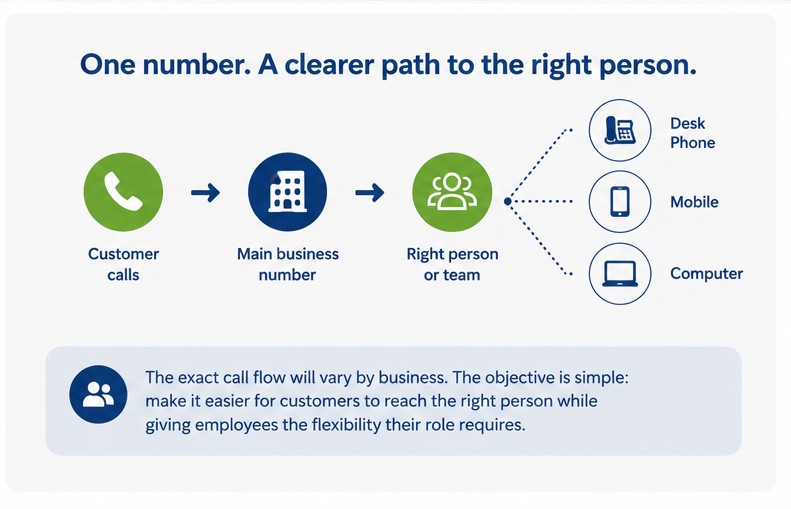
What happens after someone calls your main business number? If the answer depends heavily on who happens to be available to pick up the phone, there may be an opportunity to improve your call flow.
A modern business phone system can provide more control over how incoming calls are handled. Calls can be directed to specific people or departments, sent to groups of employees, or handled differently based on business hours.
For example, Execulink Hosted Phone offers options such as Multi-Line Hunt Groups, which can ring multiple lines in a specified way, and Premium Attendant, which can help direct callers using customized menus and greetings.
-
Simple business changes are difficult to accommodate
Businesses rarely stay exactly the same. You hire someone. An employee changes roles. You add a department. A team moves. You open another location. Your hours change. Call volumes increase during a busy season.
Your phone setup should be able to adapt along with those changes.
If adding an employee or changing how calls are handled has become a major project, your current system may be creating unnecessary complexity.
Scalability is one of the reasons businesses consider a hosted phone system. Because the phone system is hosted by the service provider, businesses can add users and adapt their communication setup without relying on the same on-site infrastructure as a traditional phone system.
-
Important information is tied to the phone itself
Voicemail is a simple example. If employees can only retrieve an important message by checking a specific phone, information can be easy to miss when they are away from their workspace.
Features such as voicemail-to-email can send voicemail messages to an employee’s email, making them easier to access when they are working elsewhere. A modern phone system should help communication move with the employee when their job requires it, rather than leaving important calls and messages attached to one physical location.
-
Your customers are adapting to your phone system instead of the other way around
Customers should not need to know who works at which location, which employee is working from home, which extension is staffed today or which cell phone number they should try next. From their perspective, reaching your business should feel simple.
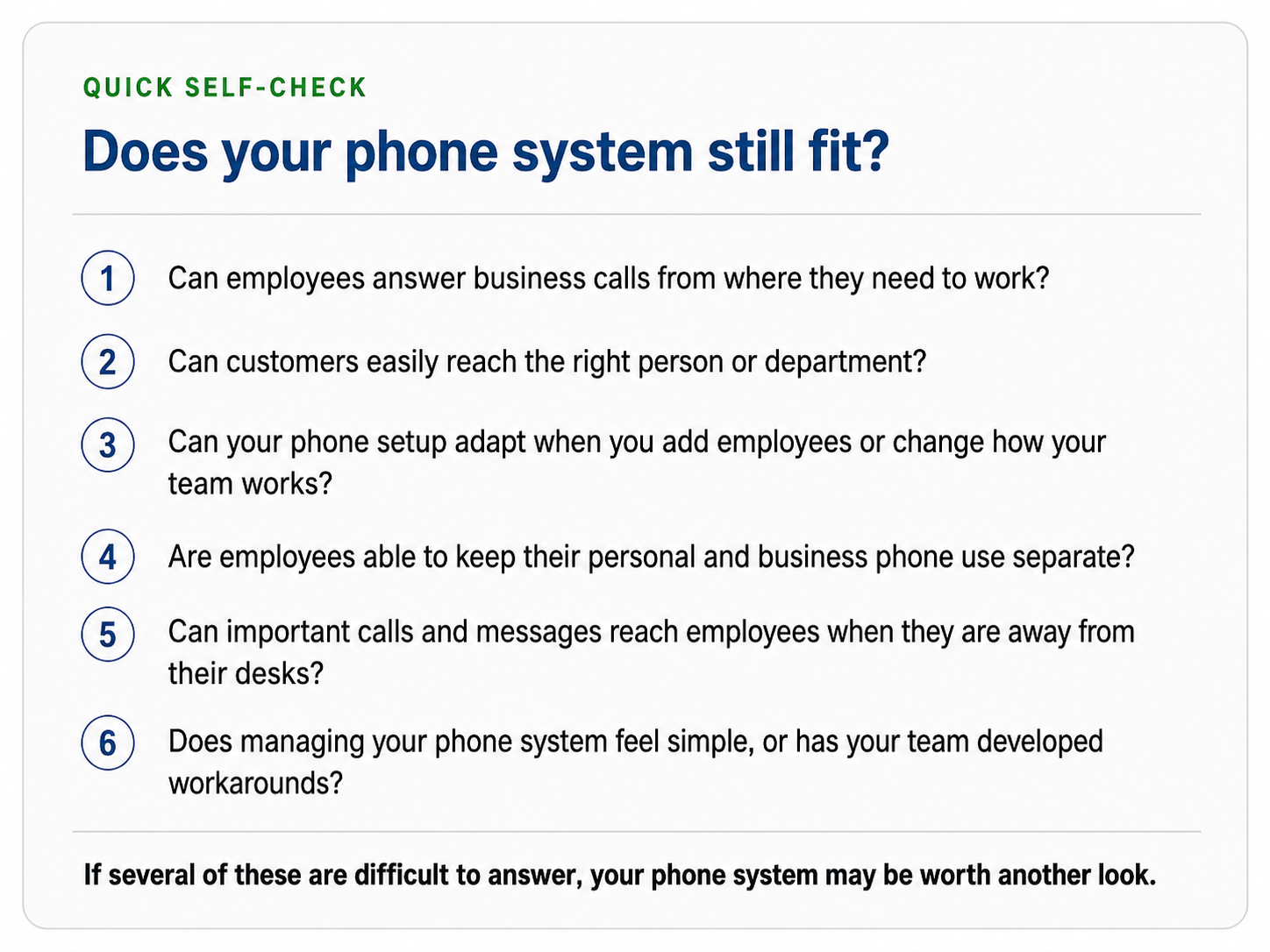
Consider questions such as:
- What happens when the person a customer normally calls is unavailable?
- Can a caller reach another member of the team easily?
- What happens when several customers call at once?
- Are callers directed appropriately outside normal business hours?
- Can employees stay reachable without sharing personal phone numbers?
What should a business phone system do for you?
The right phone system will look different from one business to another, but in general, it should support the way your team actually communicates.Give employees the flexibility to work from the appropriate device or location
- Make it easy for customers to reach the right person
- Give you control over how incoming calls are handled
- Allow the system to adapt as employees, locations or business needs change
- Help your team maintain a consistent professional business presence
Most importantly, the technology should make communication easier.
Does that mean every business needs Hosted Phone?
No. A business with straightforward calling requirements may be well served by a traditional Business Digital Phone solution. Another may benefit from the flexibility and call-management capabilities of Hosted Phone. A business already relying heavily on Microsoft Teams may want to explore Direct Routing. Other organizations may have requirements better suited to SIP Trunking or a more customized voice solution.
The right choice depends on factors such as your number of employees, locations, call volume, work environment, existing technology and how customers interact with your business.
The goal should not be to replace a phone system simply because something newer exists. The goal is to make sure the phone solution you are paying for still fits the business you have today.