















The Business Cost of Downtime
April 28, 2026 Category: Pop Culture
For many businesses, downtime doesn’t just pause work. It interrupts productivity, transactions, communication, and customer experience. When Internet service goes down, the impact is often immediate. However, the full business cost of downtime is not always obvious at first. Understanding that cost means looking at what stops, what slows down, and how those disruptions affect daily operations.
What Happens When Your Internet Goes Down
In most workplaces today, Internet connectivity supports far more than browsing or email. It connects the systems, tools, and processes that keep the business running.
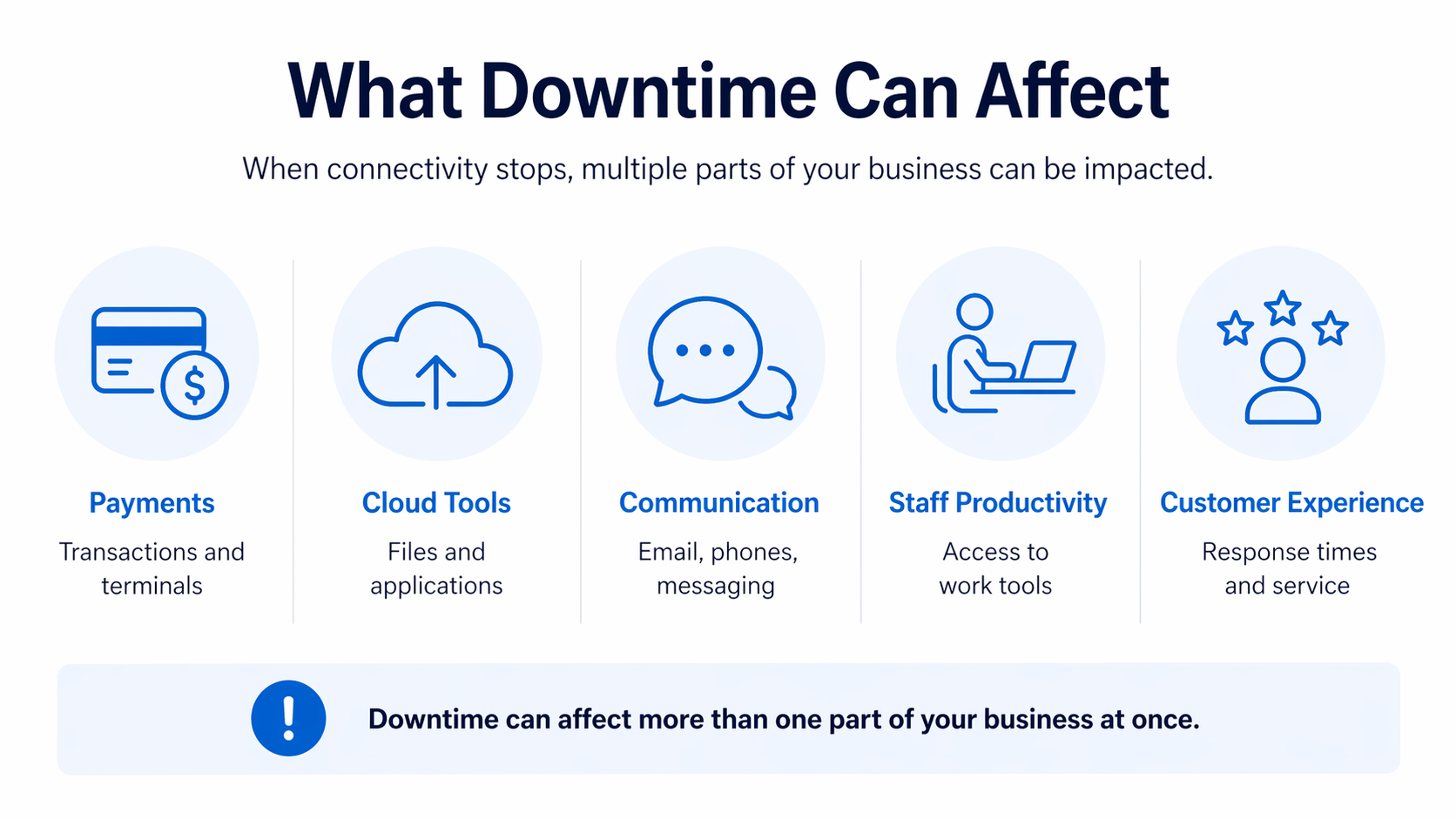
When that connection is disrupted, several things may stop or slow down at the same time.
- Teams may lose access to cloud-based systems.
- Payments may be delayed or unavailable.
- Phone systems that rely on Internet connectivity may stop working.
- Internal communication tools may also be affected.
This is what makes downtime disruptive. It rarely affects just one thing.
The Business Cost of Downtime Adds Up Quickly
The business cost of downtime is not just about how long a connection is unavailable. It is about what that lost time prevents your business from doing. When systems are unavailable, work can pause across multiple areas of the business at once. Employees may be waiting to access tools, customers may be waiting for service, and transactions may be delayed. Common impacts include:
- Work stops or slows down.
- Transactions are delayed.
- Orders, appointments, or service delivery are interrupted.
- Teams may need extra time to recover once systems are back online.
Even short disruptions can create backlogs that take time to resolve. Over time, these interruptions can affect productivity, revenue, and customer experience.
Downtime Does Not Always Look the Same
Not all downtime is a full outage. In many cases, it shows up as slow or inconsistent performance instead. This can be harder to recognize because the connection may still be working, but the business is not operating efficiently. Systems may load slowly, tasks may take longer, and employees may need to repeat steps or find workarounds. Common signs include:
- Systems take longer to respond.
- Tasks that normally take seconds take minutes.
- Employees retry actions or switch between systems to complete routine work.
- Customer-facing systems become slower during busy periods.
This type of disruption is easier to overlook, but it still affects productivity and service quality. Even when the Internet is not fully down, inconsistent performance can still contribute to the overall business cost of downtime.
When the Business Cost of Downtime Becomes a Risk
Occasional issues can happen in any environment. However, when disruptions become more frequent or begin affecting operations, they point to a larger issue. At that stage, downtime is no longer just an inconvenience. It begins to affect customer experience, staff productivity, and the speed of day-to-day operations.
For example, delayed payments, slower access to systems, or communication gaps can quickly create operational pressure that spreads beyond the original issue.
How to Start Evaluating Your Risk
A practical way to understand your exposure is to look at what depends on your Internet connection.
Consider:
- which systems require Internet access
- how employees complete their work
- how customers interact with your business
- what would stop if connectivity was unavailable
This exercise often reveals that more of the business depends on connectivity than expected. The goal is to identify which systems are most critical and which disruptions would have the greatest impact on your business.
It may also help to review planning Internet capacity for a growing business and what causes Internet slowdowns during busy periods as part of a broader look at network performance.
What to Do If You Identify Risk
If you identify areas where downtime would significantly affect your business, the next step is not to react immediately. It is to understand where your current setup may be under pressure.
For example, you may notice:
- multiple systems relying on the network at the same time
- performance issues during busy periods
- a growing number of users or connected devices
These are often early indicators that your network is no longer aligned with how your business operates today. At that point, the goal is to determine whether the issue is:
- capacity
- performance under load
- or limitations in your current setup
That understanding helps guide what to do next. From there, businesses can decide whether to adjust how the network is used, review capacity, or consider whether their current service still fits their needs.
Planning Ahead Can Reduce the Impact
The business cost of downtime is often easier to manage before it begins to affect operations. Once you understand where your network is under pressure, you can start making more informed decisions. In some cases, small adjustments may improve performance. In others, it may be a sign that your current setup no longer fits your business.
Internet connectivity plays a central role in how most businesses operate today. When it is disrupted, the effects often extend beyond what is immediately visible. Understanding the business cost of downtime helps you recognize risk earlier, respond more effectively, and support more consistent performance as your business grows.
If your business is reviewing connectivity needs, explore Execulink Business Internet solutions to see what options may support your operations.