















Planning Internet Capacity for Business Growth
April 14, 2026 Category: Business Services
Planning Internet Capacity for Business Growth
As a business grows, Internet demand usually grows with it. It rarely happens all at once. More employees join the team, more devices connect to Wi-Fi, and more cloud-based tools become part of daily operations. Video meetings, file sharing, payment systems, and security cameras all begin relying on the same connection.
At first, everything may seem fine. Then small signs start to appear, such as systems taking longer to load, video calls becoming less stable during busy periods, and file uploads lagging. Staff may also notice that performance feels less consistent throughout the day. In many cases, this is not a service failure. It is a capacity issue. That is why planning Internet capacity matters. It helps businesses understand how demand is changing before slowdowns begin affecting day-to-day operations.
Why Capacity Issues Often Go Unnoticed
One of the challenges with Internet capacity is that performance issues tend to build gradually. A network may work well when activity is light, then struggle when multiple users and systems are active at the same time. Because of that, many businesses do not notice a problem right away. They simply work around small delays until those issues become harder to ignore.
This is especially common in growing businesses. A connection that worked well for a smaller team may not perform the same way once more devices, software, and online activity are added to the network.
What Increases Internet Demand in a Business
Business Internet usage is shaped by more than just headcount. Demand often increases when businesses add:
- employee computers and mobile devices
- cloud-based software and storage
- video conferencing platforms
- point-of-sale systems
- security cameras
- guest Wi-Fi access
- printers, tablets, and other connected devices
Each addition may seem minor on its own. Together, they can significantly change how much bandwidth is being used and when demand is highest.

Planning Capacity Means Looking Beyond Speed
When businesses think about Internet performance, speed is usually the first thing that comes to mind. However, speed alone does not tell the full story. Planning Internet capacity is really about understanding how your connection is being shared across the business. The number of connected devices, the type of online activity happening at the same time, and the timing of peak usage all affect performance.
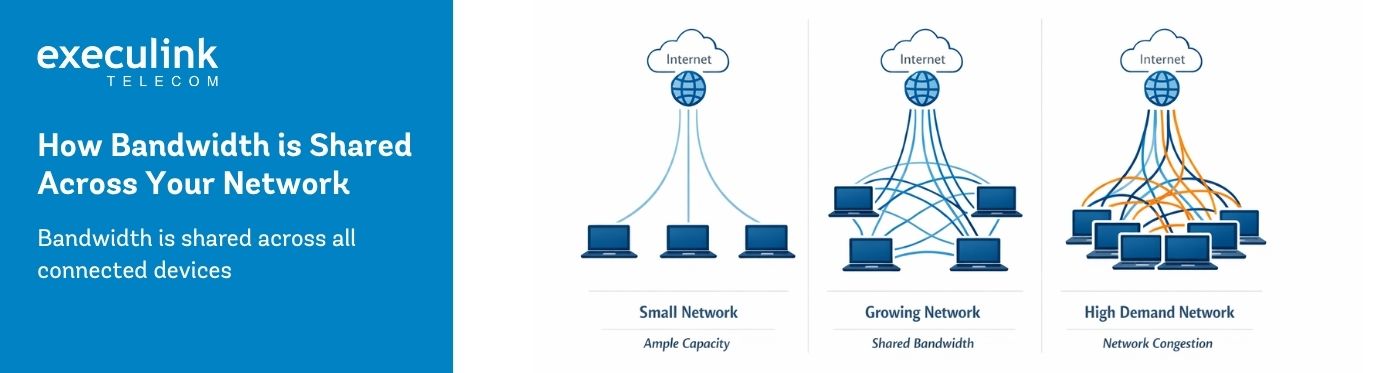
Upload demand matters too. Many modern business tools rely on sending data, not just receiving it. Video calls, cloud backups, shared files, and remote access tools can all place pressure on upload capacity during busy periods. That is why planning Internet capacity should focus on overall usage patterns, not just the speed listed on the plan.
Signs It May Be Time to Review Your Capacity
A business does not need to be in crisis to review its Internet setup. In many cases, the signs are subtle at first. Some common indicators that it may be time to take a closer look include:
- slower performance during busy times of day
- unstable video calls or voice quality issues
- delays when several staff members are online at once
- slower access to cloud-based platforms
- more connected devices than when the service was first selected
- complaints that performance feels inconsistent rather than completely down
These signs often point to growing demand rather than a one-time issue.
How to Start Planning Internet Capacity
Planning Internet capacity does not need to be complicated. A simple review can go a long way.
Count what is connected
Start by identifying the devices and systems using the network each day. This includes obvious equipment like computers and phones, but also cameras, printers, payment terminals, guest devices, and anything else connected to Wi-Fi or the wired network. Many businesses underestimate how many devices are connected at any given time, but that total has a direct impact on performance.
Look at how the connection is being used
Think about the online activities that matter most to the business. Are staff regularly on video calls? Are large files uploaded or shared? Are cloud applications central to daily operations? Different types of usage place different demands on a network, so understanding how the business uses the connection is a key part of planning Internet capacity effectively.
Identify busy periods
Performance during peak hours often tells you more than performance during quiet times. Midday activity, shift changes, customer rushes, and end-of-day processing can reveal whether current capacity is still a good fit.
Plan for the next stage of growth
Do not just review what the business needs today. Consider what may change over the next 6 to 12 months. New employees, additional devices, new software, or expanded operations can all affect future demand. A more forward-looking approach can help businesses avoid reactive upgrades later.
Planning Ahead Helps Prevent Slowdowns
Internet performance issues rarely begin with a major outage. More often, they appear gradually as networks take on more devices, more applications, and more daily traffic. By reviewing connected devices, usage patterns, and peak demand, businesses can make more informed decisions about their connectivity. Planning Internet capacity early helps reduce slowdowns, improve consistency, and better support business growth.
Frequently Asked Questions
How do I know if my business has enough Internet capacity?
If performance is generally fine but becomes less reliable during busy periods, your business may be approaching its capacity limit. That is often a sign that it is time to review usage, connected devices, and peak activity.
Does adding more devices always mean upgrading Internet speed?
Not always. However, more devices do increase total demand. If performance starts to decline as more devices and systems are added, the current setup may no longer match how the network is being used.
Is Internet speed the only thing that affects performance?
No. Performance also depends on how bandwidth is shared, how many devices are connected, what those devices are doing online, and whether demand increases during certain times of day.
How often should a business review Internet capacity?
It is a good idea to review connectivity whenever there are changes in staffing, systems, or day-to-day operations. Even small changes can add up over time.
If your business is growing or your connectivity needs are changing, explore our Business Internet solutions.