













What Makes Business Internet Business-Grade?
February 16, 2026 Category: Business Services
What Makes Business Internet “Business-Grade”?
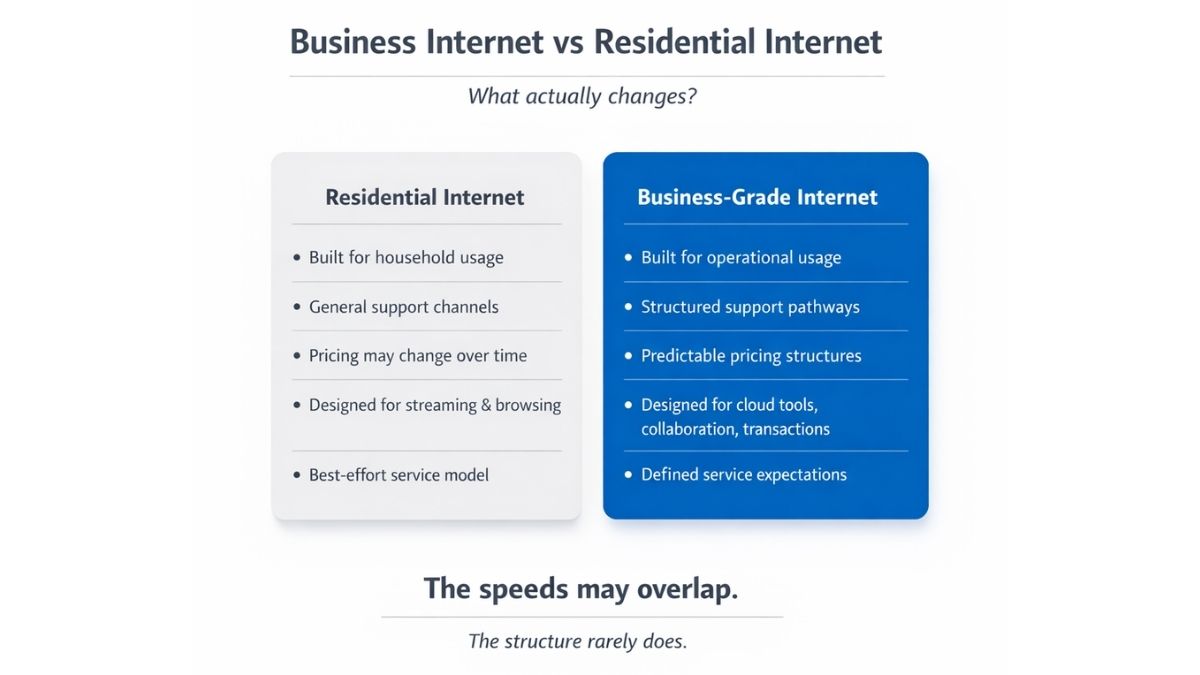
Many businesses assume business Internet simply means higher speeds. In practice, speed is often the least important difference. Business-grade Internet is structured differently. It is designed around operational reliability, defined support, and predictable planning, not just a Mbps number on a plan. When comparing business Internet vs residential service, the distinction is not only performance. It is how the service is delivered, supported, and structured for real-world operations. Understanding that difference prevents costly misunderstandings later.
Business Internet vs Residential Internet: What Actually Changes?
Here is the practical distinction.
Business-Grade Is Designed for Peak Activity, Not Quiet Moments
For many SMBs, Internet now supports:
- Microsoft 365 or Google Workspace
- Cloud accounting systems
- POS platforms
- Inventory management
- Video conferencing
- Remote collaboration
- Security systems
Performance during peak hours matters more than a speed test run at 7:00 a.m. A 20-person professional services firm running back-to-back video meetings and uploading client files does not feel issues when one person is online. They feel them when everyone is working at once. Business-grade Internet is structured with that reality in mind.
Support Structure Is Part of the Product
When something feels off with connectivity, how it is handled matters. Business-grade service typically includes:
- Clear escalation paths
- Defined support channels
- Structured troubleshooting processes
- Coordinated installation
This does not mean problems never occur. It means there is a defined way they are addressed. For a business where downtime affects revenue, clarity in response is not a luxury, it is operational protection.
Pricing Structure Reflects Planning Cycles
Business owners often notice that business Internet looks different from residential pricing models. That is intentional. Most businesses:
- Sign leases in multi-year increments
- Plan staffing annually
- Forecast expenses quarterly
- Invest in software platforms long term
Connectivity supports those same cycles.
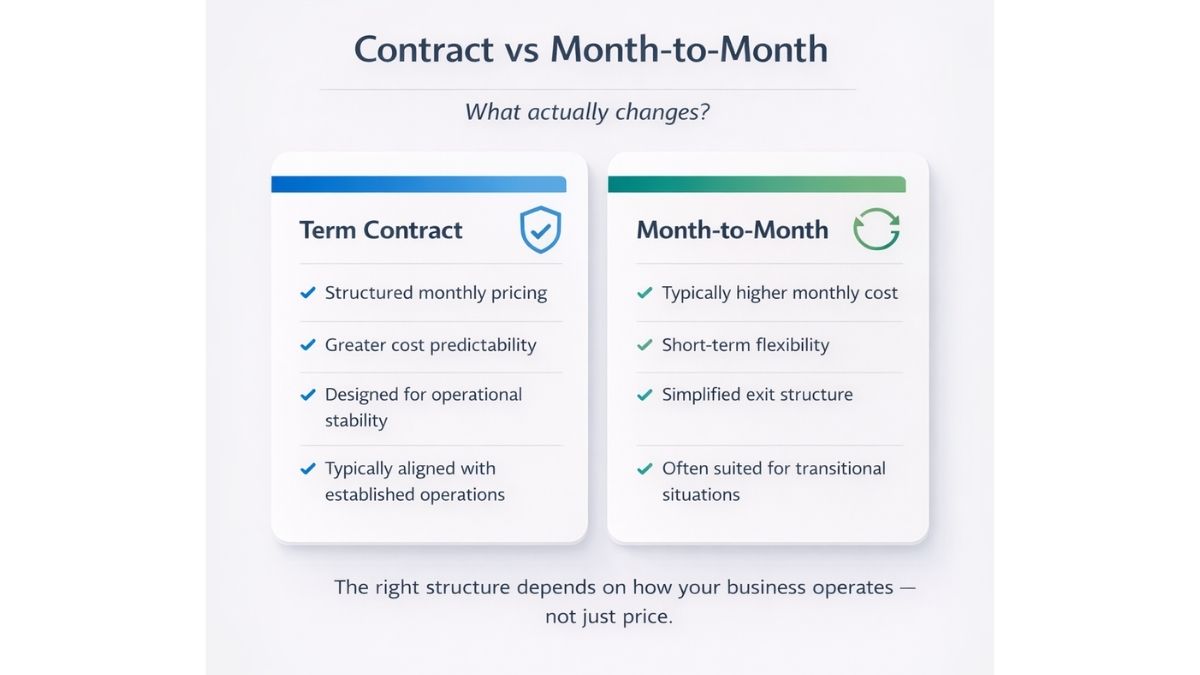
Predictable pricing and defined terms are common because they align with how businesses plan, not because flexibility is impossible. For stable operations, cost certainty often outweighs short-term variability.
Business-Grade Does Not Mean Overbuilt
It is important to separate perception from reality. Business-grade Internet does not automatically mean:
- Dedicated fibre
- Enterprise-scale complexity
- Excess capacity
For many SMBs, it simply means:
- The right speed for actual usage
- Performance that holds up during busy hours
- Clear service expectations
- Accessible support
- Stable pricing
Alignment is the goal. Not excess.
When Business-Grade Structure Matters Most
Business-grade structure becomes critical when:
- Multiple users are online simultaneously
- Cloud platforms are core to operations
- Payment processing depends on connectivity
- Customer experience relies on uptime
- Remote collaboration is routine
A retail shop processing transactions all day, a medical clinic scheduling patients online, or a manufacturer relying on cloud-based inventory systems cannot treat Internet as a convenience. In those environments, connectivity is infrastructure.
How to Evaluate What Applies to Your Business
If your Internet supports revenue-generating activity or operational systems, business-grade structure is usually appropriate. Before deciding, review:
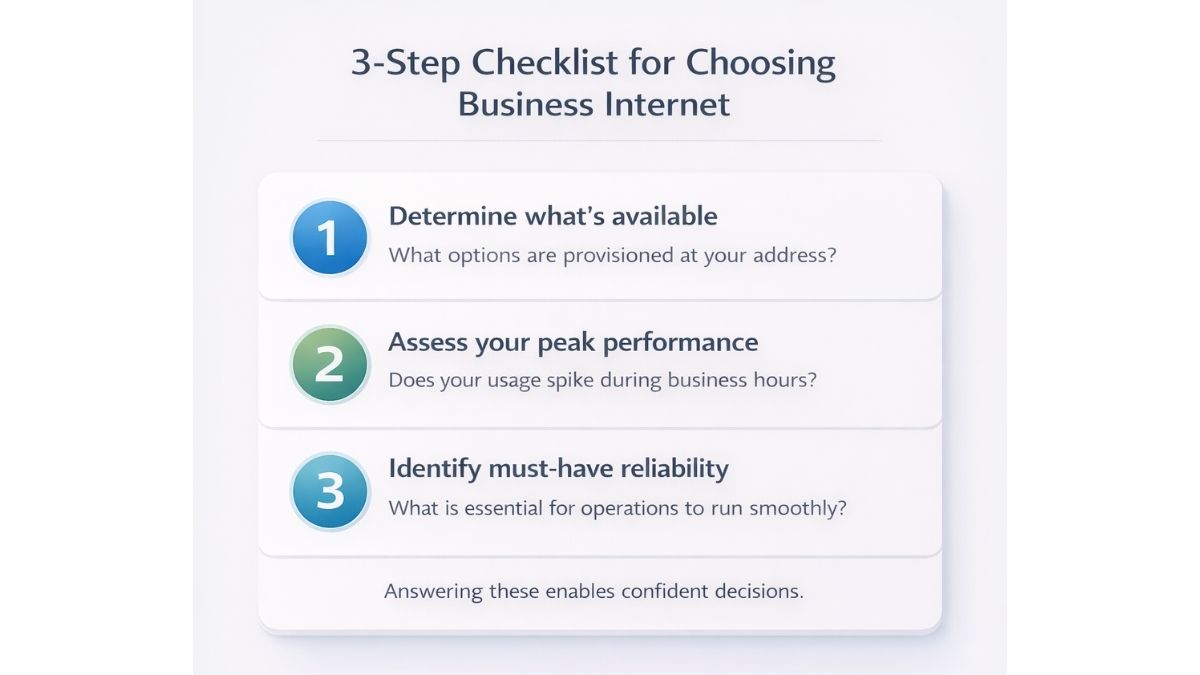
If you have not reviewed those elements yet, these guides provide helpful context:
- How Business Internet Pricing Actually Works
- Why Business Internet Availability Varies by Address
- How to Choose the Right Internet Speed for Your Business
Once those factors are clear, the distinction between residential and business-grade becomes much easier to interpret.
Frequently Asked Questions
Is business Internet always faster than residential?
Not necessarily. The difference is usually in service structure, support expectations, and reliability design, not just speed.
Does business-grade Internet guarantee zero downtime?
No provider can guarantee zero downtime. What business-grade service provides is defined response processes, realistic performance planning, and structured support when issues arise.
Why is business Internet often structured with defined terms?
Because predictable pricing and operational planning matter in business environments. Defined terms align with how most organizations plan.
Will I need to upgrade as my business grows?
Possibly. Growth changes usage patterns. Reviewing performance during peak activity is more useful than relying solely on the original speed selection.
The Bottom Line
Business-grade Internet is not defined by a higher speed tier. It is defined by how the service is structured, supported, and aligned with operational reality. Businesses that focus only on speed often end up revisiting the decision later. Structure, reliability, and clarity are what prevent that. When Internet connectivity supports revenue, collaboration, and customer experience, choosing service designed for those conditions simply makes sense.
Next Steps
If you’re reviewing your current setup, focus on context before change. Look at how your connection performs during busy periods, confirm what is available at your exact address, and consider whether your current service model supports how your team actually works.
If you would like an objective review of those factors, our Business team can walk through them with you.