













How to Choose the Right Internet Speed for Your Business
February 10, 2026 Category: Business Services
How to Choose the Right Internet Speed for Your Business
Choosing the right Internet speed for your business isn’t always straightforward.
Many businesses assume it’s just a matter of selecting a higher number, but Internet speed alone rarely tells the full story. Two businesses with the same advertised speed can have very different experiences, depending on how their connection is actually used throughout the day.
This guide explains how to think about business Internet speed in practical terms. What speed affects, what it doesn’t, and when it makes sense to review whether your current setup still fits how your business operates today.
In short:
Choosing the right business Internet speed depends less on a specific Mbps number and more on how many people are online at once, what applications are used, and when demand is highest. Upload performance, consistency, and reliability often matter more than headline speeds.
Why there isn’t one “right” Internet speed for every business
There’s no single Internet speed that works for every business.
A small professional office, a retail location, and a growing team using cloud-based tools all rely on their Internet connection differently. Even businesses in the same industry may have very different needs based on how many people are online at the same time, what applications they use, and when their busiest periods occur.
That’s why choosing Internet speed is less about finding a specific Mbps number and more about understanding real-world usage.
What Internet speed actually affects
Internet speed plays an important role in tasks such as:
- Downloading and uploading files
- Cloud backups and file synchronization
- Sending large attachments
- Uploading data to cloud-based applications
Upload speed is often overlooked, but it can be just as important as download speed, especially for businesses that rely on file sharing, cloud platforms, or video meetings.
However, speed alone doesn’t determine how a connection performs when multiple tasks happen at the same time.
What Internet speed doesn’t account for
Many performance issues appear even when advertised speeds seem sufficient on paper.
That’s because Internet speed doesn’t account for:
- The number of users online at the same time
- Multiple devices sharing the connection
- Overlapping video meetings
- Cloud applications running concurrently
- Peak business hours versus quieter periods
Most slowdowns occur during busy periods, not when a single task is running. When several people are working, meeting, uploading, and syncing at once, the connection is shared, and that’s often where limitations become noticeable.
Real-world business scenarios
Instead of thinking only in terms of speed, it helps to consider how different businesses actually operate.
Small professional offices

Email, cloud tools, shared files, and video meetings are common. Performance issues often appear when meetings overlap or multiple people upload or sync files simultaneously. Consistency during busy periods usually matters more than peak speed.
Retail and service businesses
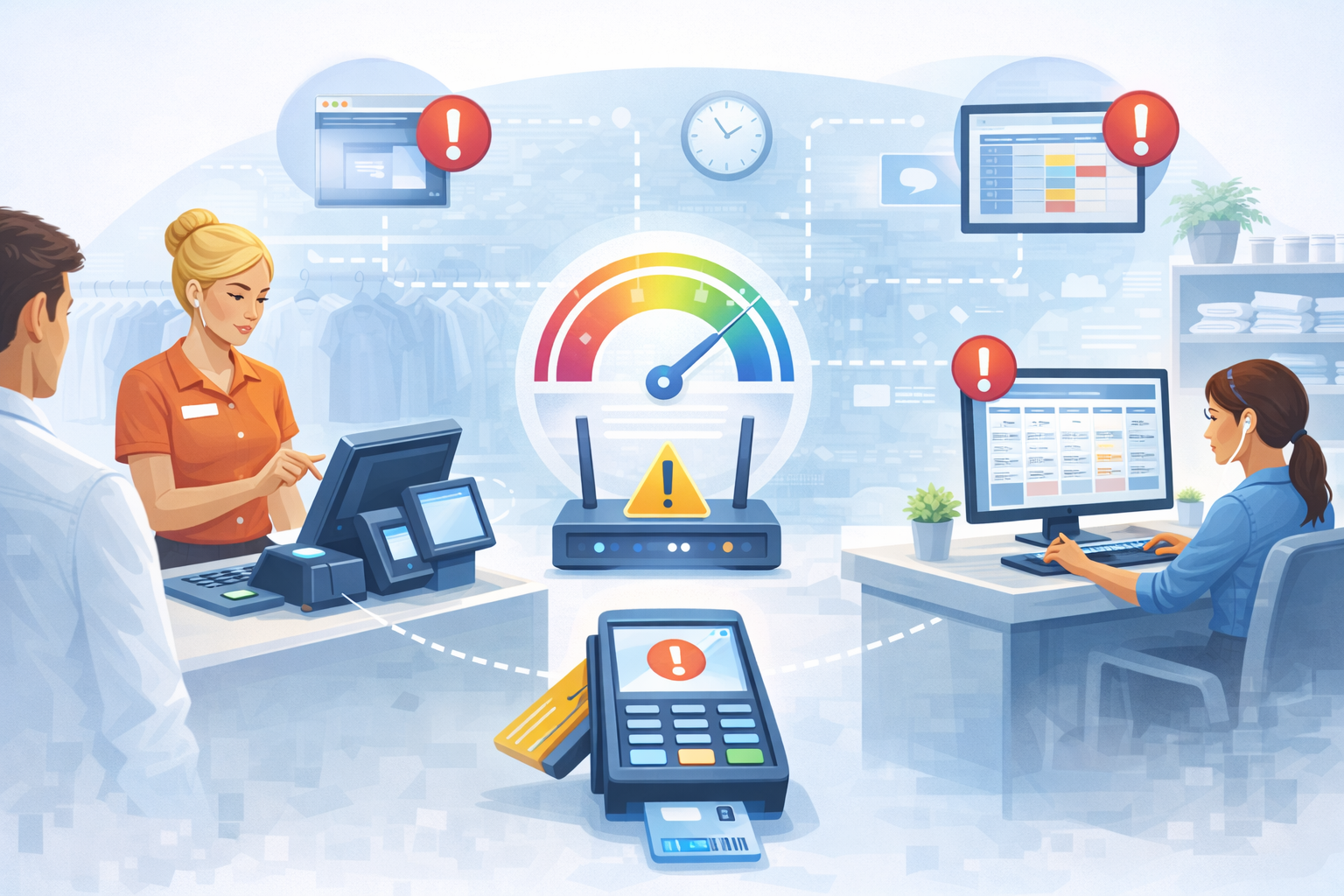
Point-of-sale systems, online booking tools, and back-office applications all rely on stable connectivity. Even if overall usage is moderate, slowdowns during peak customer hours can disrupt operations. Reliability and predictability are key.
Growing teams using cloud applications

As staff numbers increase, so does concurrent usage. A connection that once worked well may struggle as more people work online at the same time. Reviewing capacity early can help prevent issues.
Businesses handling large uploads or backups
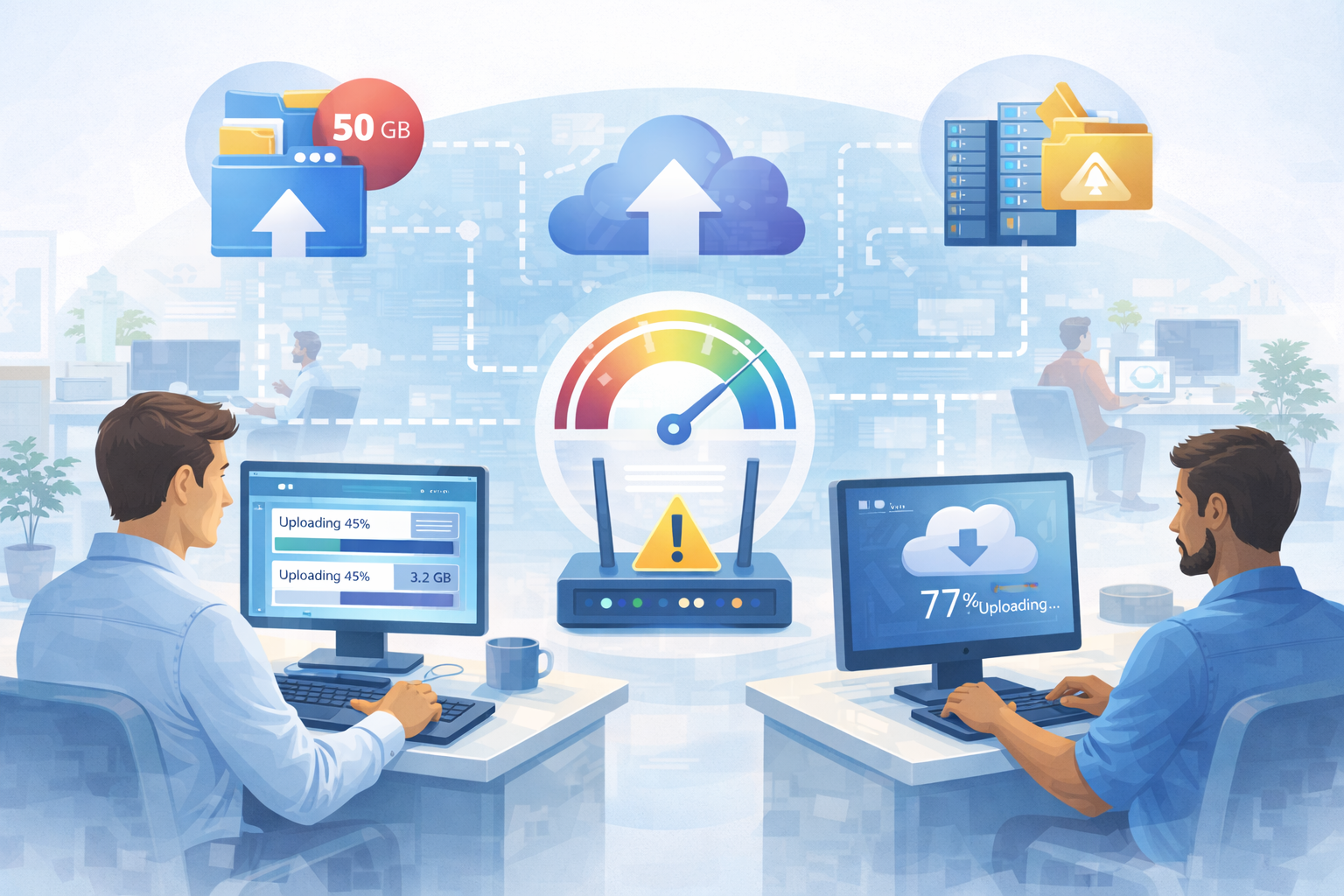
For businesses that regularly upload large files or run cloud backups, upload performance and sustained capacity are often more important than headline download speeds.
Across all scenarios, the takeaway is the same: how and when your connection is used matters more than the advertised speed alone.
How availability affects speed options
Not every Internet speed is available at every address.
Speed options depend on the network infrastructure serving a specific building or location, which is why businesses in the same area may see different options. Confirming what can actually be delivered to your address is an important first step.
You can learn more about this in our article on why business Internet availability varies by address.
Signs it may be time to review your Internet speed
Reviewing your Internet speed doesn’t automatically mean upgrading. Often, it’s about understanding whether your current setup still fits.
Businesses commonly revisit their Internet needs when they:
- Add staff or locations
- Increase use of cloud applications
- Rely more heavily on video meetings
- Experience slowdowns during busy periods
- Change systems or workflows
If these changes sound familiar, it may be time for a review.
Choosing the right speed without pressure
Good connectivity planning isn’t about constant changes or chasing the fastest available option.
It’s about understanding usage patterns, setting realistic expectations, and balancing performance, reliability, and cost. Clear information and knowledgeable local support can help businesses interpret their options and plan with confidence.
The goal isn’t the highest speeds, it’s a connection that supports how your business actually works.
Next steps
For additional context, you can also read how business Internet pricing actually works.