








Common Misconceptions About Business Internet Pricing

Common Misconceptions About Business Internet Pricing


Why Business Internet Pricing Is Often Misunderstood

Many business Internet pricing misconceptions happen when businesses compare numbers without comparing structure. Speed, monthly rate, and promotional discounts are easy to see, but infrastructure is not.

Business Internet pricing reflects how a connection is built and supported. It reflects network design, upload capacity, escalation structure, and the level of stability required to support daily operations, not just Mbps.

In simple terms, business Internet pricing is shaped by infrastructure and service design, not just speed. When structure is ignored, pricing feels inconsistent. When structure is understood, pricing becomes logical.

Below are five common business Internet pricing misconceptions that regularly create confusion when businesses evaluate Internet costs.

Misconception #1: Price Is Just About Speed

Speed is the easiest metric to compare, but it is also the least complete. If two providers advertise 300 Mbps, it may seem reasonable to expect similar pricing. However, identical speeds can be delivered through very different network structures.

For example, a shared cable connection and a fibre-based connection may advertise the same download speed, but they may not perform the same way under sustained demand.

Business Internet pricing reflects several structural factors:

  • The infrastructure serving your address
  • Whether the connection is shared or dedicated
  • Upload capacity and sustained performance
  • How traffic is managed during peak hours
  • The support and escalation model attached to the service

As a connection becomes more critical to business operations, raw speed comparisons become less useful. Speed indicates how fast data can move, but it does not explain how the connection behaves when multiple systems are running at once or how quickly issues are resolved.

Before comparing price alone, ask:

  • What network is this built on?
  • How does it perform under load?
  • What happens when something goes wrong?

If you want a deeper look at how capacity differs from headline speed, see our guide on How to Choose the Right Internet Speed for Your Business.
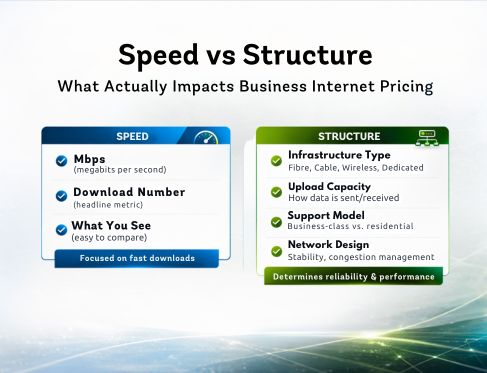
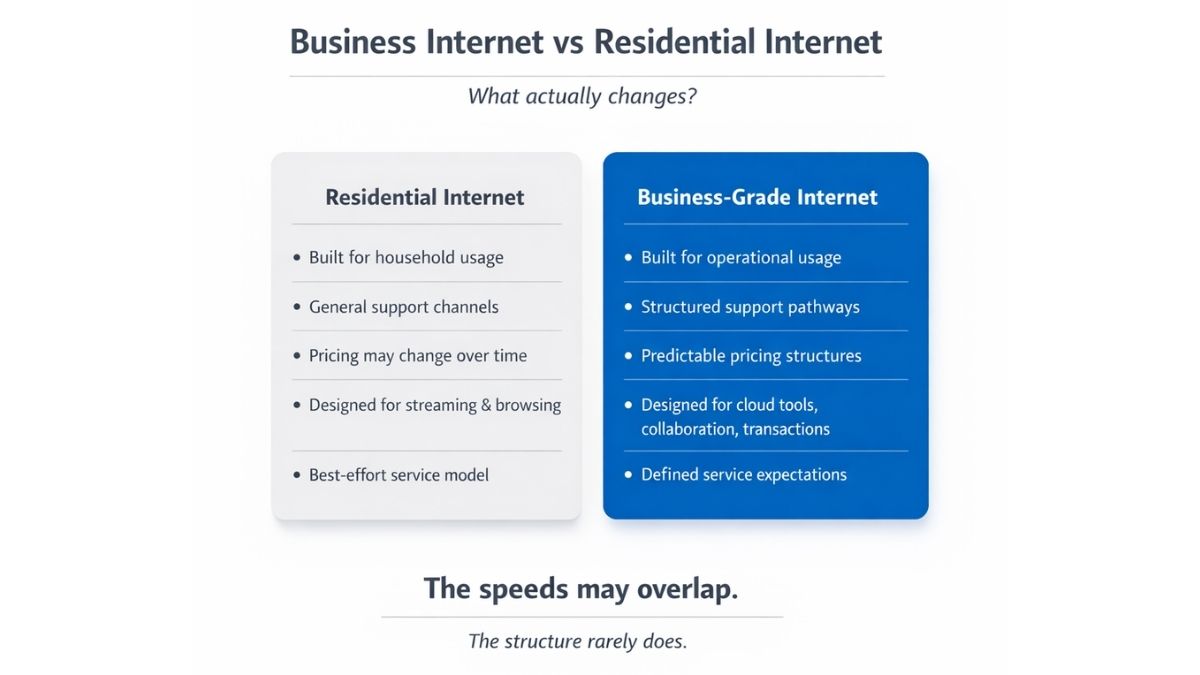
Comparison showing speed versus network structure and how infrastructure, upload capacity, and support model affect business Internet pricing.


Misconception #2: Business Internet Is Just Residential at a Higher Price

This assumption often comes from comparing monthly rates without comparing expectations. Residential service is designed for household activity, while business service is designed for operational continuity.

A household can usually tolerate short interruptions or occasional slowdowns. A business running cloud accounting software, VoIP systems, or point-of-sale terminals often cannot.

Business Internet typically includes:

  • Defined business support channels
  • Clear escalation paths
  • Stability expectations for multiple concurrent users
  • Optional static IP configurations
  • Service structures built around uptime

The pricing difference reflects that design. Business connectivity is not simply faster home Internet. It is built around different performance and support standards.

When comparing costs, the relevant question is not “Why is this more?” but “What level of stability and support does this business require?”


Misconception #3: All Providers Price the Same Way

They do not. Business Internet pricing is heavily influenced by infrastructure, and infrastructure varies by address.

Two businesses operating in the same Ontario city can have very different connectivity options depending on:

  • Fibre availability at their specific location
  • Distance from network buildouts
  • Shared versus dedicated infrastructure
  • Local network capacity

This is why availability varies by address. If you have not reviewed it, our article on Why Service Availability Varies by Address explains how qualification works and why pricing can differ.

Pricing differences between providers often reflect structural differences in how the network is built, maintained, and supported, not simply pricing strategy. Without understanding what infrastructure serves a specific address, price comparisons lack context.


Misconception #4: Switching Providers Automatically Lowers Costs

Promotional pricing creates that impression. Sometimes switching reduces monthly cost. Sometimes it shifts cost elsewhere.

Changing providers can involve:

  • Installation and activation
  • Equipment changes
  • Service requalification
  • Contract alignment
  • Temporary operational disruption

The cheapest connection is often the one that costs the most when something fails. Evaluating price properly means looking beyond the first invoice. It means considering long-term stability, responsiveness, and operational impact.

Our overview of How Business Internet Pricing Actually Works breaks down how infrastructure and service structure influence long-term cost.


Misconception #5: Advertised Speed Tells the Whole Story

Download speed is easy to market, but business performance depends on more than peak download numbers.

Upload capacity, latency, device count, and concurrent usage patterns all affect daily reliability. A five-person accounting firm using cloud-based tax software places very different demands on a connection than a retail shop running a single POS terminal, even if both purchase the same speed.

When performance feels inconsistent, the issue is not always insufficient speed. It may be upload constraints, network congestion, or structural capacity limits.

Evaluating price without considering how the connection is used often leads to overpaying for unnecessary speed or underinvesting in necessary stability.
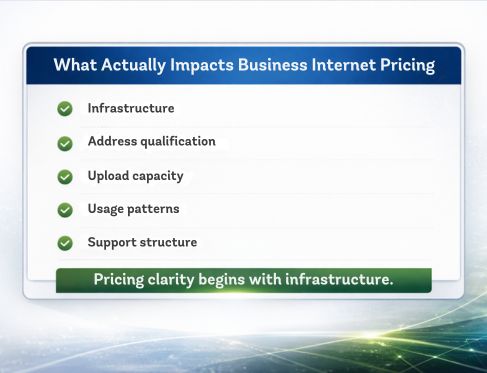
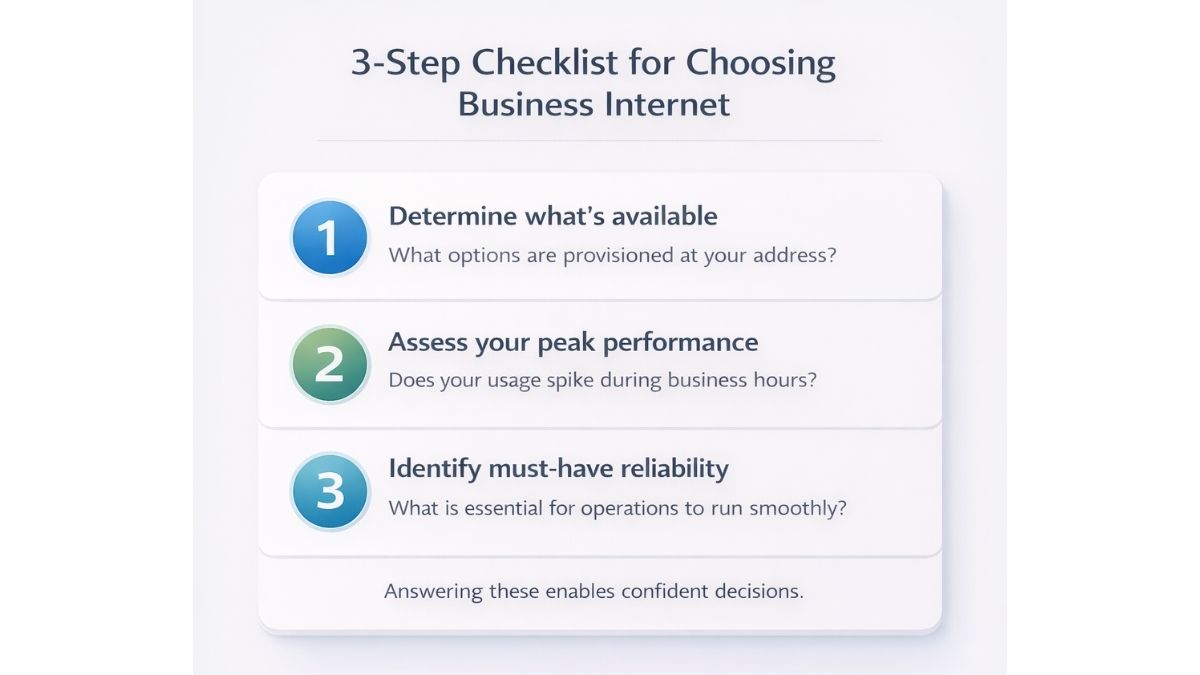
Checklist showing factors that influence business Internet pricing including infrastructure, address qualification, upload capacity, usage patterns, and support structure.

What Actually Matters When Evaluating Business Internet Pricing

Business Internet pricing becomes clearer when viewed through structure rather than surface metrics.

Before focusing solely on monthly rate, consider:

  • What infrastructure serves this address?
  • How critical is this connection to daily operations?
  • How many systems depend on it simultaneously?
  • What support response time is acceptable?
  • How will usage evolve over the next 12 to 24 months?

Pricing clarity begins when infrastructure is understood, not when speeds are compared.


Frequently Asked Questions About Business Internet Pricing

What affects business Internet pricing?

Infrastructure type, address qualification, upload capacity, service structure, and support expectations all influence pricing.

Is business Internet more expensive than residential?

In most cases, yes. Business service includes different stability, support, and escalation standards designed for operational use.

Why does pricing vary by address?

Infrastructure availability differs by location. Fibre access, network design, and local capacity all affect qualification and pricing.

Does higher speed always mean better performance?

No. Performance depends on how the connection is built, supported, and used, not just peak download speed.




Is a Home Phone Still Worth It in 2026?

If you haven’t thought much about your Home Phone plan lately, you’re not alone. For many households, a Home Phone is one of those quiet essentials; it just works in the background. But with cell phones taking over most calls, it’s normal to wonder: Do I really need a Home Phone? What does it actually include? And is it still worth it in 2026?

Let’s break it down simply and show why having a Home Phone might still be one of the smartest decisions for your household.


  1. Reliable Calling Every Day

At its core, your Home Phone provides:

  • Clear local calling
  • A stable, dependable connection
  • A phone number that doesn’t change
  • Access to 911 tied to your home address

Unlike cell phones, which can drop calls or lose signal indoors, your Home Phone is anchored to your home. That means in an emergency, help can find you quickly.

For many customers, that peace of mind alone makes it worthwhile, especially for families, seniors, and anyone who works from home.


  1. Helpful Features You Actually Use

Depending on your plan, your Home Phone may include features like:

  • Voicemail
  • Voicemail-to-Email
  • Call Display
  • Call Waiting
  • Three-Way Calling

These aren’t flashy, but they’re practical.

  • Voicemail-to-Email lets you check messages when you’re on the go
  • Call Display helps screen unknown calls before picking up
  • Separate Home Line keeps personal and work calls from getting tangled

Even in 2026, these little conveniences save time, reduce stress, and make life easier.


  1. Long Distance Options That Keep You Connected

Calling family outside your local area? Long distance still matters. Some plans include long-distance automatically, and others let you add it only when you need it.

Many households today are:

  • Calling adult children across provinces
  • Staying in touch with aging parents
  • Maintaining connections with friends or family overseas

Your Home Phone can handle all this reliably, something a cell phone alone can’t always do without extra fees or dropped calls.


  1. All Your Services Under One Roof

Here’s where things get simple: when your Home Phone is bundled with Internet (and other services), all your tech lives under one roof.

  • One provider
  • One support team
  • One place to call when you need help

No bouncing between companies. No wondering who to contact. Just one local team that knows your services inside and out. For many customers, that convenience is just as valuable as the phone line itself, and it’s a reason to keep your Home Phone as part of your home setup.


  1. Is Home Phone Still Worth It? Absolutely. Home Phone isn’t just a relic of the past; it’s a dependable tool for today’s households.

It continues to make sense for:

  • Homes that want a reliable backup line
  • Families supporting aging parents
  • Locations with spotty mobile coverage
  • Anyone who prefers the comfort of a traditional handset
  • Home-based businesses that want separation between work and personal calls

Mobile phones are convenient, yes, but they aren’t always the most dependable option indoors. Home Phone isn’t outdated – it’s steady and familiar. For many families, it’s still an essential way to stay connected t0day!


Find the Right Home Phone Plan for You

If you’re unsure what’s included in your current Home Phone plan, or want to add Home Phone to your service line-up, Execulink makes it simple! Our residential Home Phone plans start at just $9.95/month, and we can help you figure out which plan best fits your household. Sometimes the best move isn’t adding something new, it’s making sure what you already have still works perfectly for your home.

Visit execulink.ca/phone to review our Home Phone packages, long-distance options, and additional features today!

Why Business Connectivity Support Structure Matters for Reliability

Why Business Connectivity Support Structure Matters

Updated March 2026

When Internet, voice systems, or network services support daily operations, even small disruptions can affect productivity, transactions, and communication. Reliable business connectivity support becomes critical when those systems require attention.

Resolution speed depends not only on technology, but also on how providers structure business connectivity support behind the service. Network performance alone does not determine business connectivity reliability. Clear support responsibility, escalation paths, and service coordination also shape reliability. Customer support, in a business environment, becomes part of infrastructure.


What This Article Covers

Businesses often focus on bandwidth or pricing when evaluating connectivity. However, operational reliability is also shaped by how business connectivity support works in practice.

This article explains:

  • why support structure affects uptime
  • how escalation paths influence resolution speed
  • how coordinated services reduce operational friction
  • when businesses may benefit from reviewing their connectivity environment


When Business Connectivity Support Structure Becomes Visible

Businesses rarely notice support processes when everything is working normally. They become visible when something changes.

A system slows unexpectedly. A service interruption occurs. An upgrade affects another platform. Teams need answers quickly so work can continue.

In environments where multiple vendors manage different services, troubleshooting can become fragmented. One provider reviews the connection while another reviews equipment or configuration. Responsibility can become unclear, and resolution may take longer than expected.

Businesses often discover that reliability is shaped as much by support coordination as by infrastructure itself.


Why Business Connectivity Support and Escalation Paths Matter

When connectivity supports revenue or customer interactions, clarity matters during unexpected issues. A defined escalation path allows businesses to start solving problems immediately rather than determining who owns them first.

Structured business connectivity support typically leads to:

  • faster troubleshooting
  • clearer accountability
  • reduced operational disruption
  • more predictable resolution timelines

For many organizations, this clarity becomes just as valuable as technical performance.


Coordination Across Connected Services

Modern business environments rely on multiple systems working together. Cloud platforms, payment processing, collaboration tools, remote access, cybersecurity systems, and VoIP phone platforms all depend on stable connectivity.

When services evolve independently over time, changes often happen in isolation. Internet capacity may increase without reviewing internal network configuration. Communication systems may expand without evaluating bandwidth demand.

Reviewing services together reduces operational risk and makes growth easier to support. Businesses often begin this process by reviewing their Business Internet, Business Phone, or Business Networking Solutions to better understand how systems interact across daily operations.

When services and support are aligned, several operational improvements typically follow.

The Role of Local Business Connectivity Support

Local support often influences how efficiently connectivity issues are resolved. Technical capability matters, but familiarity also plays an important role. Support teams that understand local infrastructure, deployment environments, and operational realities can often identify issues more efficiently.  Continuity reduces the need to repeatedly explain systems or priorities during time-sensitive situations.

Uptime statistics alone do not define reliable connectivity. It is also defined by confidence in the support process behind the service.


When It May Be Worth Reviewing Your Support Structure

Not every business needs to restructure connectivity services. However, reviewing business connectivity support may be useful when:

  • multiple providers manage Internet, voice, or networking services
  • troubleshooting requires coordination between vendors
  • growth has increased reliance on cloud platforms
  • response processes feel unclear during service issues
  • expansion or relocation is being planned

For many businesses, the most useful first step is simply reviewing how their connectivity and support are structured today, especially if systems have been added gradually over time.

Some organizations begin this review alongside broader infrastructure planning, including evaluating whether consolidating telecom services could improve coordination and accountability.


Reliability Is More Than Infrastructure

Connectivity decisions are often framed around technology specifications. Speed, bandwidth, and equipment all matter. However, service support shapes operational reliability just as much once services are in place.

Clear ownership, responsive escalation, and coordinated business connectivity support reduce uncertainty when uptime matters most. Support structure is part of service structure.

As businesses become increasingly dependent on connected systems, reviewing how support works can be just as valuable as reviewing the connection itself.


Frequently Asked Questions

Does customer support really affect Internet reliability?

Yes. Infrastructure determines performance, but business connectivity support determines how quickly issues are identified and resolved. Clear escalation paths often reduce operational disruption.

Is one provider always better than multiple providers?

Not necessarily. The key factor is coordination and accountability. Businesses benefit when responsibility and response processes are clearly defined.

When should a business review connectivity support?

Reviews are often helpful after growth, technology adoption, relocation, or when operations become more dependent on cloud platforms and real-time communication.


Why Consolidating Your Business Telecom Services Makes Sense

Most businesses don’t set out to create telecom complexity. They inherit it.

Internet was added during one phase of growth. Voice was upgraded during a move. Mobility plans were layered in as teams became more flexible. A backup solution was introduced after an outage. Each decision made sense at the time.

Over a few years, those separate decisions can turn into a structure that is harder to manage. Not broken. Just fragmented. Different providers. Different contracts. Different support queues. Different renewal timelines. Individually manageable. Collectively inefficient.

Consolidation is not about chasing bundle discounts. It is about simplifying how your infrastructure is managed and reducing operational friction.


How Telecom Complexity Starts Slowing You Down

The impact of multiple providers rarely shows up immediately. It shows up when coordination is required.

An issue arises and one vendor says it is not their service. An upgrade is made without reviewing how it affects other systems. Accounting reconciles multiple telecom invoices every month. Renewals happen at different times with different terms.

None of these are catastrophic problems. However, they consume time, slow resolution, and blur accountability.

As reliance on cloud platforms, mobility, and real-time systems increases, that friction becomes more noticeable. What once felt manageable can begin to feel inefficient.

What Consolidation Actually Changes

Consolidating services under one provider does more than simplify billing. It clarifies structure.

One Clear Escalation Path

When Internet, Voice, and Networking services are aligned, responsibility is clearer. You do not have to determine whether the issue is the circuit, the equipment, or the phone system. You start in one place.

That clarity often shortens resolution time and reduces confusion during service interruptions. Clear escalation paths and responsive customer support play a significant role in that clarity.

Coordinated Changes

When services are managed separately, upgrades often happen in isolation. Internet speed may increase without reviewing internal network capacity. Voice systems, including modern VoIP platforms, may change without evaluating bandwidth impact.

When services are structured together, changes are reviewed together. This reduces unintended pressure elsewhere in your environment.

Administrative Simplicity

Multiple vendors mean multiple contracts, billing cycles, and account contacts. Consolidation does not eliminate complexity, but it makes oversight easier.

For finance and operations teams, simplified administration reduces recurring friction and makes long-term planning clearer.

Better Infrastructure Visibility

When services are aligned, it becomes easier to understand what depends on what, where capacity pressure builds, how traffic flows, and how systems interact.

Visibility supports better planning. Planning reduces surprises.

When It Is Worth Reviewing

Consolidation is not necessary for every business. However, it is worth evaluating when you rely on multiple providers for Internet, Voice, and Networking, when growth has increased device count or cloud usage, when service issues require vendor coordination, when billing and renewals feel fragmented, or when you are planning expansion or relocation.

If your business depends on reliable Business Internet, cloud platforms, and real-time systems, structural clarity becomes increasingly important.


Does Consolidation Increase Risk?

Some businesses worry that relying on a single provider concentrates risk. In practice, multiple vendors do not automatically reduce risk. They can simply redistribute it and sometimes make accountability less clear.

Risk is better managed through thoughtful infrastructure design, redundancy planning, and defined escalation paths. Consolidation can support that clarity when structured properly.


Is It Just About Cost?

Cost savings may be part of the equation. However, for many businesses, the larger value comes from clearer accountability, faster issue resolution, less administrative overhead, and better-aligned upgrades.

The benefit is often structural, not just financial.


A More Deliberate Approach to Infrastructure

As businesses become more dependent on cloud platforms, mobility, and real-time data, telecom infrastructure becomes foundational.

Consolidation is not about packaging services together. It is about asking whether your current structure reflects how your business operates today.

If your telecom environment evolved gradually, it may be worth reviewing whether simplification would improve clarity. Not because something is broken, but because growth often introduces quiet complexity.

If you’re already reviewing your setup this year, a structured assessment can help confirm whether consolidation would actually simplify day-to-day operations.


Frequently Asked Questions

Does consolidating telecom services save money?

It can, particularly if bundled pricing improves contract terms. However, for many businesses, the greater benefit comes from operational simplicity. Fewer vendors often means clearer accountability, faster issue resolution, and reduced administrative effort.

Is it risky to rely on a single telecom provider?

Risk is best managed through infrastructure design and redundancy planning, not simply by adding more vendors. Consolidation can improve clarity around responsibility and escalation, which often strengthens risk management rather than weakening it.

How do you transition from multiple providers to one?

A structured review is typically the first step. This includes assessing contracts, renewal dates, infrastructure dependencies, and service requirements. Transitions are usually phased to avoid disruption and ensure continuity.


What Makes Business Internet Business-Grade?

What Makes Business Internet “Business-Grade”?

Many businesses assume business Internet simply means higher speeds. In practice, speed is often the least important difference. Business-grade Internet is structured differently. It is designed around operational reliability, defined support, and predictable planning, not just a Mbps number on a plan. When comparing business Internet vs residential service, the distinction is not only performance. It is how the service is delivered, supported, and structured for real-world operations. Understanding that difference prevents costly misunderstandings later.


Business Internet vs Residential Internet: What Actually Changes?

Here is the practical distinction.

Business-Grade Is Designed for Peak Activity, Not Quiet Moments

For many SMBs, Internet now supports:

  • Microsoft 365 or Google Workspace
  • Cloud accounting systems
  • POS platforms
  • Inventory management
  • Video conferencing
  • Remote collaboration
  • Security systems

Performance during peak hours matters more than a speed test run at 7:00 a.m. A 20-person professional services firm running back-to-back video meetings and uploading client files does not feel issues when one person is online. They feel them when everyone is working at once. Business-grade Internet is structured with that reality in mind.


Support Structure Is Part of the Product

When something feels off with connectivity, how it is handled matters. Business-grade service typically includes:

  • Clear escalation paths
  • Defined support channels
  • Structured troubleshooting processes
  • Coordinated installation

This does not mean problems never occur. It means there is a defined way they are addressed. For a business where downtime affects revenue, clarity in response is not a luxury, it is operational protection.


Pricing Structure Reflects Planning Cycles

Business owners often notice that business Internet looks different from residential pricing models. That is intentional. Most businesses:

  • Sign leases in multi-year increments
  • Plan staffing annually
  • Forecast expenses quarterly
  • Invest in software platforms long term

Connectivity supports those same cycles.


Predictable pricing and defined terms are common because they align with how businesses plan, not because flexibility is impossible. For stable operations, cost certainty often outweighs short-term variability.


Business-Grade Does Not Mean Overbuilt

It is important to separate perception from reality. Business-grade Internet does not automatically mean:

  • Dedicated fibre
  • Enterprise-scale complexity
  • Excess capacity

For many SMBs, it simply means:

  • The right speed for actual usage
  • Performance that holds up during busy hours
  • Clear service expectations
  • Accessible support
  • Stable pricing

Alignment is the goal. Not excess.


When Business-Grade Structure Matters Most

Business-grade structure becomes critical when:

  • Multiple users are online simultaneously
  • Cloud platforms are core to operations
  • Payment processing depends on connectivity
  • Customer experience relies on uptime
  • Remote collaboration is routine

A retail shop processing transactions all day, a medical clinic scheduling patients online, or a manufacturer relying on cloud-based inventory systems cannot treat Internet as a convenience. In those environments, connectivity is infrastructure.


How to Evaluate What Applies to Your Business

If your Internet supports revenue-generating activity or operational systems, business-grade structure is usually appropriate. Before deciding, review:

If you have not reviewed those elements yet, these guides provide helpful context:

Once those factors are clear, the distinction between residential and business-grade becomes much easier to interpret.


Frequently Asked Questions

Is business Internet always faster than residential?

Not necessarily. The difference is usually in service structure, support expectations, and reliability design, not just speed.

Does business-grade Internet guarantee zero downtime?

No provider can guarantee zero downtime. What business-grade service provides is defined response processes, realistic performance planning, and structured support when issues arise.

Why is business Internet often structured with defined terms?

Because predictable pricing and operational planning matter in business environments. Defined terms align with how most organizations plan.

Will I need to upgrade as my business grows?

Possibly. Growth changes usage patterns. Reviewing performance during peak activity is more useful than relying solely on the original speed selection.


The Bottom Line

Business-grade Internet is not defined by a higher speed tier. It is defined by how the service is structured, supported, and aligned with operational reality. Businesses that focus only on speed often end up revisiting the decision later. Structure, reliability, and clarity are what prevent that. When Internet connectivity supports revenue, collaboration, and customer experience, choosing service designed for those conditions simply makes sense.


Next Steps

If you’re reviewing your current setup, focus on context before change. Look at how your connection performs during busy periods, confirm what is available at your exact address, and consider whether your current service model supports how your team actually works.

If you would like an objective review of those factors, our Business team can walk through them with you.


How to Choose the Right Internet Speed for Your Business

How to Choose the Right Internet Speed for Your Business

Choosing the right Internet speed for your business isn’t always straightforward.

Many businesses assume it’s just a matter of selecting a higher number, but Internet speed alone rarely tells the full story. Two businesses with the same advertised speed can have very different experiences, depending on how their connection is actually used throughout the day.

This guide explains how to think about business Internet speed in practical terms. What speed affects, what it doesn’t, and when it makes sense to review whether your current setup still fits how your business operates today.

In short:
Choosing the right business Internet speed depends less on a specific Mbps number and more on how many people are online at once, what applications are used, and when demand is highest. Upload performance, consistency, and reliability often matter more than headline speeds.


Why there isn’t one “right” Internet speed for every business

There’s no single Internet speed that works for every business.

A small professional office, a retail location, and a growing team using cloud-based tools all rely on their Internet connection differently. Even businesses in the same industry may have very different needs based on how many people are online at the same time, what applications they use, and when their busiest periods occur.

That’s why choosing Internet speed is less about finding a specific Mbps number and more about understanding real-world usage.


What Internet speed actually affects

Internet speed plays an important role in tasks such as:

  • Downloading and uploading files
  • Cloud backups and file synchronization
  • Sending large attachments
  • Uploading data to cloud-based applications

Upload speed is often overlooked, but it can be just as important as download speed, especially for businesses that rely on file sharing, cloud platforms, or video meetings.

However, speed alone doesn’t determine how a connection performs when multiple tasks happen at the same time.


What Internet speed doesn’t account for

Many performance issues appear even when advertised speeds seem sufficient on paper.

That’s because Internet speed doesn’t account for:

  • The number of users online at the same time
  • Multiple devices sharing the connection
  • Overlapping video meetings
  • Cloud applications running concurrently
  • Peak business hours versus quieter periods

Most slowdowns occur during busy periods, not when a single task is running. When several people are working, meeting, uploading, and syncing at once, the connection is shared, and that’s often where limitations become noticeable.


Real-world business scenarios

Instead of thinking only in terms of speed, it helps to consider how different businesses actually operate.

Small professional offices

Email, cloud tools, shared files, and video meetings are common. Performance issues often appear when meetings overlap or multiple people upload or sync files simultaneously. Consistency during busy periods usually matters more than peak speed.

Retail and service businesses

Point-of-sale systems, online booking tools, and back-office applications all rely on stable connectivity. Even if overall usage is moderate, slowdowns during peak customer hours can disrupt operations. Reliability and predictability are key.

Growing teams using cloud applications

As staff numbers increase, so does concurrent usage. A connection that once worked well may struggle as more people work online at the same time. Reviewing capacity early can help prevent issues.

Businesses handling large uploads or backups

For businesses that regularly upload large files or run cloud backups, upload performance and sustained capacity are often more important than headline download speeds.

Across all scenarios, the takeaway is the same: how and when your connection is used matters more than the advertised speed alone.


How availability affects speed options

Not every Internet speed is available at every address.

Speed options depend on the network infrastructure serving a specific building or location, which is why businesses in the same area may see different options. Confirming what can actually be delivered to your address is an important first step.

You can learn more about this in our article on why business Internet availability varies by address.

Signs it may be time to review your Internet speed

Reviewing your Internet speed doesn’t automatically mean upgrading. Often, it’s about understanding whether your current setup still fits.

Businesses commonly revisit their Internet needs when they:

  • Add staff or locations
  • Increase use of cloud applications
  • Rely more heavily on video meetings
  • Experience slowdowns during busy periods
  • Change systems or workflows

If these changes sound familiar, it may be time for a review.


Choosing the right speed without pressure

Good connectivity planning isn’t about constant changes or chasing the fastest available option.

It’s about understanding usage patterns, setting realistic expectations, and balancing performance, reliability, and cost. Clear information and knowledgeable local support can help businesses interpret their options and plan with confidence.

The goal isn’t the highest speeds, it’s a connection that supports how your business actually works.


Next steps

For additional context, you can also read how business Internet pricing actually works.


5 Everyday Features That Make Your Home Phone Easier (and Cooler) Than You Think

Let’s be honest, home phones don’t always get the credit they deserve. With smartphones taking over, it’s easy to forget that a good old-fashioned home phone can actually make life simpler, safer, and even a little more fun. Here are five features that prove your home phone is quietly awesome!

  1. See Who’s Calling (Before You Answer!)

Ever get a ring and think, “Do I even want to answer this?” That’s where Call Display comes in. With call display, you can see who’s calling before you pick up, giving you a chance to dodge telemarketers and prioritize the people you actually want to talk to. Bonus: it comes FREE with both of Execulink’s Home Phone Lite and Home Phone Premium plans!

  1. Voicemail That Actually Works for You

Missed a call? No problem! Voicemail on modern home phones is smarter than you think. Get alerts straight to your email or cell phone so you can check messages anytime, anywhere! Whether it’s your kids calling from school or a delivery notification, you’ll never be out of the loop.

  1. Call Waiting and Forwarding = Life-Savers

Ever been on a call and another one comes in? Don’t panic. Call waiting lets you juggle multiple calls like a pro. And call forwarding? It’s basically your phone’s way of saying, “I’ve got your back,” making sure important calls reach you even when you’re out and about.

The best part? Both of these features come free with Execulink’s Home Phone Premium plan!

Check out all of Execulink’s additional calling features here.

  1. Senior-Friendly (Yes, Really!)

Home phones aren’t just easy, they’re designed with everyone in mind. Big buttons, clear displays, loud sound, and emergency dialing options make them super simple for seniors to use. Peace of mind for families? Check. Stress-free calling for loved ones? Double check.

  1. Reliable and Affordable

Let’s face it, phones are only as good as their connection. Home phones give you rock-solid reliability (no dead batteries or spotty signals here) and plans start at just $9.95/month! That’s a small price for staying connected every single day, without the drama and screens.

Explore Execulink’s Home Phone Plans here.

So, before you write off the home phone as “old-school” remember, it’s simple, dependable, and packed with features that make life a little easier – isn’t that what we are all striving for these days? It’s the little hero of your home, quietly keeping you connected to the people who matter most. Check out Execulink’s Home Phone plans today!

7 Phone Habits That Make Life Easier (Not More Stressful) This Year

Let’s be honest: our phones are doing a lot. They’re our calendars, cameras, grocery lists, work tools, school communication hubs, recipe books, and somehow also the place we go to “relax.”

The problem isn’t our phones. It’s how cluttered, noisy, and reactive they can make our days feel. So this year, instead of trying to “use your phone less” (because… unrealistic), try using it better. A few small habit shifts can make your phone feel more like a helpful assistant and less like a tiny source of constant stress.

Here are some realistic digital (phone) habits that actually make life easier and more organized:

  1. Clean Up Your Home Screen

Your home screen is the first thing you see dozens of times a day. If it’s packed with apps, notifications, and visual noise, your brain feels it.

Try this:

  • Keep only your daily-use apps on your main screen
  • Move everything else into folders or a second screen
  • Put the most distracting apps off the main page

This isn’t about making your phone look Pinterest-worthy, it’s about reducing decision fatigue every time you unlock it.


  1. Turn Notifications Into Invitations, Not Interruptions

Not everything deserves your attention right now. Most notifications are designed to pull you in, not help you. When everything dings, nothing feels calm.

Easy wins:

  • Turn off notifications for social media, shopping apps, and games
  • Keep alerts for messages, calls, calendars, and school/work essentials
  • Use notification summaries so updates arrive in batches instead of all day long

Your phone should work for your schedule, not hijack it.

  1. Use Notes for Your Brain Dump (Not Just Random Thoughts)

Mental clutter is exhausting. Your phone can actually help lighten that load.

Instead of trying to remember:

  • that gift idea
  • that random task
  • that “don’t forget this later” thought

Put it in one place and create simple notes like:

  • “Running List”
  • “Gift Ideas”
  • “Things to Ask / Follow Up On”
  • “Meal Ideas the Kids Will Actually Eat”

The goal isn’t organization perfection, it’s getting thoughts out of your head and somewhere safe.

  1. Let Your Calendar Do the Remembering

If you’re still keeping important dates in your head, that’s a lot of unnecessary stress. Remember, your calendar isn’t just for appointments, it’s for life.

Use it for:

  • School events and reminders
  • Bill due dates
  • Birthdays (with a reminder before, not the day of)
  • Even things like “order groceries” or “prep for busy week”

When your phone remembers things for you, your brain gets to rest a little more.


  1. Create “No-Scroll” Moments (Not No-Phone Rules)

You don’t need strict screen-time rules to feel better, you just need intentional breaks.

Try choosing a few moments where scrolling is off-limits:

  • The first 20 minutes of your morning
  • During meals
  • The last 30 minutes before bed

Your phone can still be nearby, just not the default activity. These small boundaries create more presence, calmer evenings, and better sleep without feeling restrictive.


  1. Use Your Phone to Simplify, Not Complicate

Your phone should reduce effort, not add to it.

Lean into tools that save time:

  • Grocery apps with saved lists
  • Voice notes when your hands are full
  • Shared calendars or reminders with your partner
  • Photo albums instead of endless camera rolls

When your phone helps you stay one step ahead, daily life feels smoother, especially on busy days.


  1. Be Kind to Yourself About Phone Habits

Some days you’ll scroll more. Some days your phone will feel overwhelming. That’s normal. The goal isn’t “perfect digital habits”, it’s creating a phone environment that supports your real life, not an ideal one.

Small changes add up:

  • Fewer interruptions
  • Less mental clutter
  • More ease in your day

And honestly? That’s a win.


Here’s to a year where your phone supports your life, instead of running it – helped along by a mobility plan that’s made for how you actually use your phone. Execulink Mobility keeps staying connected simple, so your phone can do its job without adding extra stress.

Why Business Internet Availability Varies by Address

Key Takeaways

  • Business Internet availability depends on the network infrastructure serving a specific address.
  • Not all buildings or locations are connected to the same technologies.
  • Available speeds, service types, and pricing can vary even within the same area.
  • Address qualification helps ensure businesses choose a service that can actually be delivered.


When businesses compare Internet options, one of the first questions that comes up is why business internet availability can vary by address, sometimes even between nearby locations.

Business Internet availability depends on the physical network infrastructure serving a specific building. Factors like how a property was connected, the type of network available, and whether upgrades are required all influence which services, speeds, and pricing options can be delivered.

This article explains why business Internet availability varies by address, what determines which services are available, and why qualifying your address is an important first step when reviewing business Internet options.


How network infrastructure affects availability

Business Internet service starts with the infrastructure already in place at a specific address. That infrastructure may include fibre lines, copper-based services, cable networks, or other access technologies.

Not every building is connected to every type of network. Extending or upgrading infrastructure can involve time, coordination, and cost, which is why availability is always confirmed by address rather than assumed. This is also why two businesses located close to one another may see different Internet options.


Why buildings matter, not just neighbourhoods

Availability isn’t determined only by city or postal code; the building itself plays a major role. Internet availability is determined step by step, from the broader network to the individual building and suite.

Internet availability is determined at the building and suite level. Options can vary even within the same neighbourhood or commercial complex.

Factors that can influence available services include:

  • When the building was constructed
  • Whether fibre was installed during development
  • Internal wiring and connection points
  • How the building connects to the broader network

In older commercial buildings or multi-tenant properties, available services may be limited by how the building was originally connected. Even in newer developments, not every suite or unit is necessarily served the same way.


Why higher speeds aren’t available everywhere

Speed availability is tied to the type of network serving an address and the capacity that network can support.

Even if a business wants higher speeds, the underlying infrastructure may not be designed to deliver them without upgrades. This is why speed options are confirmed by address and why service availability can differ between locations.

For businesses, availability is about what can be reliably delivered and supported — not just what appears on a plan list.


What address qualification actually does

When a provider asks to qualify an address, they’re confirming:

  • Which networks serve the location
  • What speeds and service types are available
  • What level of performance and support can be delivered
  • Whether upgrades or alternative solutions are required

This step helps avoid mismatched expectations and ensures businesses are presented with options that can realistically be installed and supported at their location.

Qualify your address


When it makes sense to check availability again

Businesses often revisit Internet availability when:

  • Moving to a new location
  • Expanding or adding locations
  • Upgrading speed or service level
  • Experiencing performance limitations
  • Planning for growth or operational changes

Availability can change over time as networks expand or buildings are upgraded. A quick review can sometimes surface new options that weren’t previously available.

Explore business Internet options


Frequently Asked Questions

Q: Why can’t I get the same Internet service as another business nearby?
A: Because Internet availability depends on the specific network infrastructure serving each address, not just the surrounding area.

Q: Does availability affect pricing?
A: Yes. The type of network available at a specific address and the level of service that can be delivered both influence pricing.
How business Internet pricing actually works explains how location, capacity, and service expectations factor into pricing decisions.

Q: Can availability change over time?
A: Yes. As networks expand or buildings are upgraded, new services may become available.


About the Author

Execulink Business Team
The Execulink Business team supports Ontario-based organizations with business Internet, voice, and connectivity solutions. With a focus on clear options, predictable pricing, and local support, the team helps businesses choose services that fit real-world operational needs.


How Business Internet Pricing Actually Works | Execulink Business

How Business Internet Pricing Actually Works


Key Takeaways

  • Business Internet pricing depends on location, service type, and capacity needs.
  • Available speeds and pricing can vary by address based on network infrastructure.
  • Speed is about capacity and consistency, not just headline numbers.
  • Contract and month-to-month options serve different business needs.


When businesses compare Internet options, pricing can seem unclear at first. That’s because business Internet is structured differently than residential services, and it’s designed that way to support reliability, performance, and multiple users during the workday.

This article explains how business Internet pricing actually works, what affects it, and when it makes sense to review your current service.


How business Internet pricing is determined

Business Internet pricing is not one-size-fits-all. It reflects a combination of technical and operational factors that help ensure consistent performance for business use.

  1. Service availability depends on location

The first factor that affects pricing and available options is location.

Different addresses are served by different types of network infrastructure. As a result:

  • Available speeds may vary by address
  • Some technologies are available in certain areas but not others
  • Pricing reflects the network required to deliver the service

This is why businesses are often asked to qualify their address before finalizing Internet options. Address qualification helps ensure expectations match what can realistically be delivered to that location. Qualify your address- https://www.execulink.ca/business/business-fibre-internet/


  1. Speed is really about capacity

For businesses, speed is less about “how fast” and more about how much activity the connection can support at the same time.

Higher speeds typically provide:

  • More capacity when multiple users are online
  • Better performance during peak usage times
  • Greater support for cloud-based tools and applications

Choosing the right speed is about selecting a level that fits how your business operates today. not simply choosing the highest available number.


  1. Pricing reflects the type of service delivered

Business Internet pricing generally accounts for:

  • The underlying network infrastructure
  • The selected speed or capacity
  • Service reliability and support expectations

While two services may use similar access technology (such as fibre), pricing can differ based on how the service is delivered and supported. Some services are designed for everyday operations with standard support expectations, while others include defined service commitments, faster restoration targets, and expanded support availability. Understanding this distinction helps explain why business Internet pricing can vary even when speeds appear similar.

Fibre services can be delivered in different ways

Fibre describes the connection type, not the service level. Two fibre-based services can look similar on paper (especially if the speeds are comparable), but pricing can differ based on how the service is delivered and supported. Some fibre services are built for everyday operations with standard business support. Others include defined service commitments, proactive monitoring, and faster restoration targets, which can matter more for businesses with low tolerance for downtime.

This distinction helps explain why business Internet pricing can vary even when speeds appear similar, and why different businesses choose different service levels based on operational risk.

Actual availability, restoration targets, and support hours depend on provider and location.


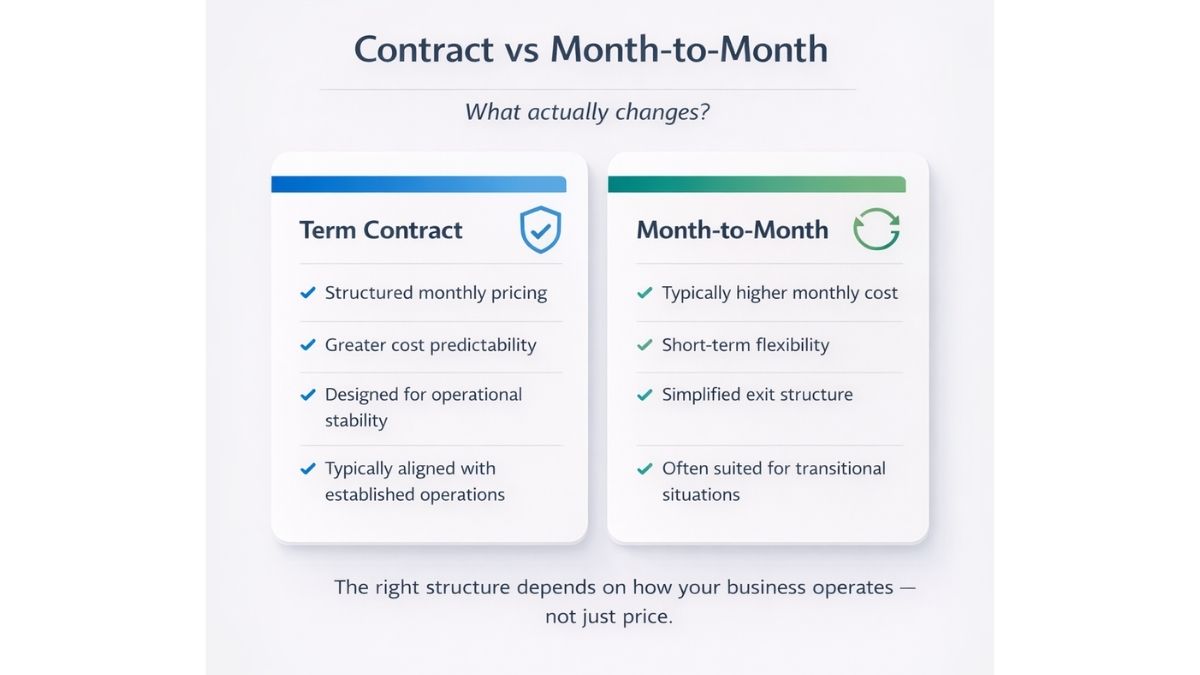
  1. Contract vs. month-to-month options

Business Internet services may be offered under a contract or on a month-to-month basis.

In general:

  • Contract options often provide more predictable pricing over time
  • Month-to-month options offer flexibility but may be subject to price changes

The right choice depends on how long you expect to remain at a location and how important pricing stability is for your business.


  1. When it makes sense to review your Internet setup

Businesses commonly revisit their Internet service when:

  • Teams grow or usage increases
  • More tools move to the cloud
  • Performance feels strained during busy periods
  • Planning ahead for the year

A short review can help confirm whether your current service still fits your needs, or whether a small adjustment could improve day-to-day performance. Explore business internet options – https://www.execulink.ca/business/internet/


Frequently Asked Questions

Q: Why does business Internet pricing vary by address?
A: Different locations are served by different network infrastructure, which affects available speeds, service types, and delivery costs.

Q: Is faster Internet always better for a business?
A: Not necessarily. The best option is the speed that provides enough capacity for your users and applications without paying for more than you need.

Q: What’s the difference between business and residential Internet?
A: Business Internet is designed to support multiple users, consistent daytime performance, and business-critical applications, which influences how it’s structured and priced.

Q: Should I choose a contract or month-to-month plan?
A: That depends on how long you plan to stay at your location and whether predictable pricing is a priority for your business.


About the Author

Execulink Business Team

The Execulink Business team specializes in business Internet, voice, and connectivity solutions for Ontario-based organizations. With experience supporting small and mid-sized businesses across a range of industries, the team focuses on clear service options, predictable pricing, and local support.

The Internet Services You Deserve
Affordable. Reliable. Lightning fast.

We’re proud to provide the communities we know, love, and live in, with the reliable Internet, TV, Phone and Mobility services they deserve.

  • Your local choice for residential and business telecommunication services
  • Renowned 24/7 customer service you can depend on
  • Affordability, service, integrity and transparency are the pillars of our business

Here to help. 24/7.

Sales Inquiries

Sales: Mon-Fri 8AM-8PM, Sat 8AM-5PM

(866) 706-1991

Support Inquiries

Technical Support: 24/7, Customer Care: Mon-Sun 7AM-11PM

(866) 706-1994

Online Help

Chat With Us

We'll respond as soon as we can!

Email Us

We'll get back to you as soon as possible.

Support Centre

Find the answer to your question.

Check availability

Enter your address to find services and offers available to you!