








What’s the Difference Between a Router and an Access Point?

As technology advances, there always seems to be new gadgets to keep track of that help maintain your home or business’s connectivity. In a business context, two pieces of technology that have important distinctions include routers and access points (APs).  This blog will fully explore the similarities and differences between routers and access points to help you plan and evaluate your home and business network.
What is a Router?

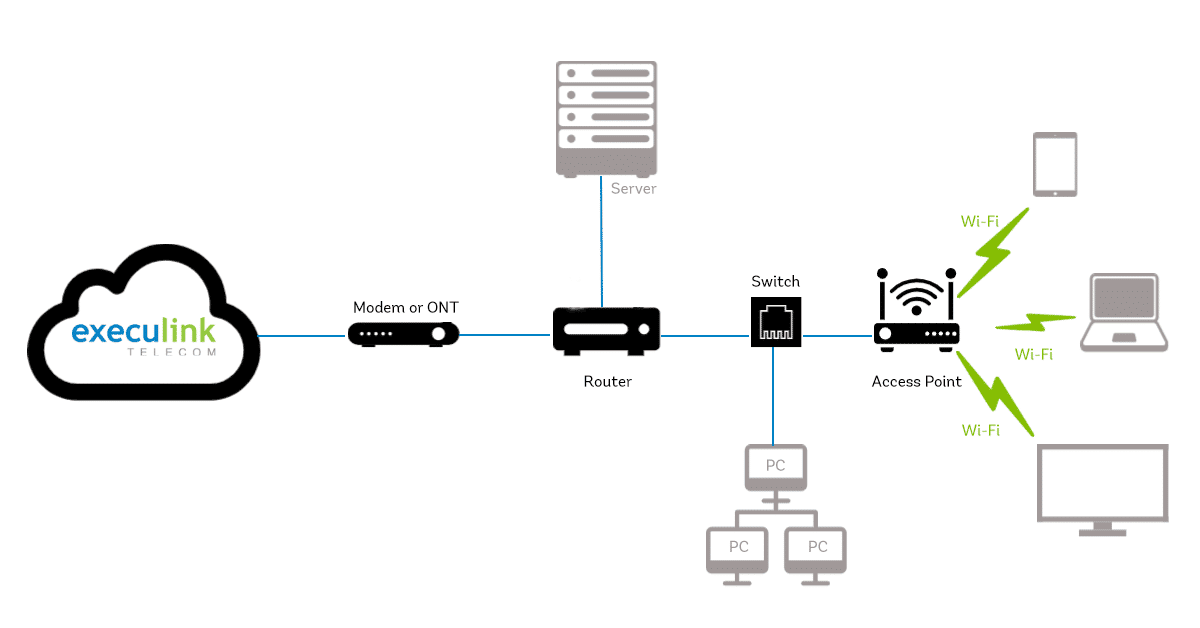
What does a router do? Well, it routes! That is, it routes your Internet connection from one public IP address to many local IP addresses. It allows local devices such as phones, laptops, and other internet enabled devices to communicate. Routers know when a local device is asking to leave the local network and go out into the Internet. When you deploy a router and connect several devices to it, it acts as a gateway

Residential routers usually contain wireless radios that let you connect to Wi-Fi devices wirelessly as well. However, in a business environment, access points take on that role.  Additionally, routers can add a layer of protection by incorporating firewalls or setting / establishing network rules.

What is an Access Point?

An access point acts as a dedicated wireless network appliance for devices to connect to a local area network. They enable a broader network by extending wireless coverage and increasing the number of users that can connect to it. Wireless access points typically connect to a router or switch through Ethernet.  They are sub-devices within the network that provide another location for your laptops, smartphones, or other devices to access Wi-Fi.

Main Differences

The router acts as a gateway that sets up a local area network and manages all of the devices. The router also identifies traffic that needs to leave the local area network and connect to the Internet. An access point, on the other hand, is a local network appliance within your network that provides a Wireless Local Area Network (WLAN) for devices to connect from. An access point is an impressive piece of technology dedicated to managing wireless networks that can handle the overhead of many wireless users. Its estimated that by 2023, wireless devices will increase to 3.6 devices per person. You need a dedicated access point network to handle this traffic – your router has enough to do!

What are the Differences?

1. Function

Most consumer/residential routers available these days can act as a wireless access point, an Ethernet router, a basic firewall, and a small Ethernet switch. Access points in themselves differ from routers because they do not handle any packets leaving the LAN, and only manage wireless LAN traffic.  A router can have the functionality of an access point but an access point cannot necessarily have the functionality of a router.

The router can link and manage all devices connected to it. However, an access point only provides access to the router’s established network.

2. Connection

The residential wireless router will offer Wi-Fi signals directly or you can add a switch to extend the network and add wireless access points. In a business environment, the router is not able to offer those Wi-Fi signals directly to your wireless devices. It is preferable to have the access points take over that functionality to allow for better coverage.

You may be wondering if having a router is necessary if you have access points?

Certain modems have DCHP and NAT built into the modem and you can plug an access point directly into them without a router. But in larger networks, the router is designed to handle the heavy lifting of your network settings, and it’s best to separate the modem and the router!

3. Coverage

A router provides wireless coverage at home to reach a limited amount of people. Access points become necessary for larger businesses and hotspot WLANs. Access points can help to connect many more users. It usually makes sense to have several APs within your network. When it comes to coverage, placement of devices is extremely important to consider.  You should survey the area where you are bringing Wi-Fi and optimize the placement of the routers and/or access points to prevent dead zones.

4. Users

Wi-Fi Routers are certainly suitable for smaller office spaces (>1000 square feet) and home use. Access Points are beneficial in larger office spaces, schools, or hotels. They essentially act as a wireless switch bringing connectivity to many users across a large space. When you consult with your Internet service provider, be sure to consider the size of your space.

Execulink Telecom’s Technology in Action

When building your business Wi-Fi solution, Execulink Telecom offers a variety of options depending on the needs of your business, the size of the space you need connected, and more.
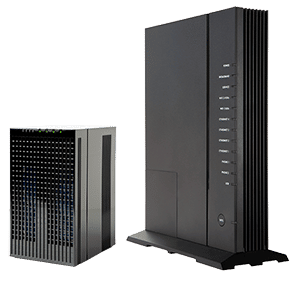
Execulink Telecom’s Complete Wi-Fi system includes a Mesh Wi-Fi Node (left) and a Premium Router (right).

Execulink Telecom’s Complete Wi-Fi solution is typically recommended for home-based businesses that don’t require guest Wi-Fi. The Premium Router offers a strong, expandable solution that will blanket your home in fast, reliable Wi-Fi.  You can easily add Mesh Wi-Fi Nodes to this router to eliminate dead zones.

The Ubiquiti Access Point

Alternatively, the Ubiquiti access points can be used for more complex business set ups with large spaces.  This solution can increase coverage beyond 1000 sqft. These access points offer a roaming feature that ensures you maintain connectivity throughout the whole building.  This is useful if you have a voice-over IP solution, you can walk around the whole building without any dropped calls.

Finally, the Bluesocket access point solution is best suited for large deployments with a high density of users such as a concert venue, tradeshow, or outdoor venue.  This solution is proactive at managing security risks and comes with a built-in firewall and wireless intrusion detection.

The Lighthouse Festival Theatre

Part of Execulink Telecom’s installation process involves a site survey of your business and floorplan to evaluate where the router and access points should be placed.  For example, before switching to Fibre Internet from Execulink Telecom, the Lighthouse Festival Theatre in Port Dover had just one router attempting to cover the old, 2-story building. During the site survey, Execulink Telecom’s Technicians evaluated the space and 5 Bluesocket access points were added to enhance connectivity. These access points provided the necessary coverage to support up-to 120 theatre patrons.

As an analogy, access points and routers are part of the same company, but work in separate departments. These devices have the same overall mission and work together to help build your network and expand capacity.   We recommend working with your Internet Service Provider to determine the right network technology for your business.

To learn more about Execulink’s Internet and Wi-Fi solutions, speak with a business representative today.

Get a quote for Business Internet today!

Hosted PBX – A Universal Business Solution

Communication plays a fundamental role in all facets of business and having an effective and reliable method of communication is a cornerstone of any successful company. With this in mind, it’s not surprising that 92% of companies in Canada have adopted Software as a Service (SaaS). According to the CDW 2021 Cloud Report, businesses who implement cloud-based services see the greatest benefits in business agility, improved security, simplified/standardized infrastructure, sourcing control, and driving digital transformation.

SaaS – Cloud-based phone systems

SaaS, or cloud-based software, is a method of software delivery that allows data to be accessed from many devices with an Internet connection. Cloud-based phone systems, also referred to as Hosted PBX, fall under this service model. They have become a universal solution for both SMBs and large organizations looking for more efficient communication tools and to reduce their business costs.

A Hosted PBX (Private Branch Exchange) is a cloud-based phone system that is hosted off-site. It allows you to make calls using the Internet rather than relying on copper wires or fibre optics to make a connection as many traditional analog phones do. Your phones are physically on-site, but they connect to secure cloud servers through a new or existing Internet connection.

Benefits of a Hosted PBX to your business

A Hosted PBX can transform your business communications. The capabilities and rich feature set of a cloud-based system extend to all business types and sizes, presenting a number of advantages including mobility, accessibility, flexibility, manageability, and cost efficiencies. On top of this, it also represents a way to scale your business for the future with continuing technological advancements, making it a valuable long-term investment.

A universal business solution

To put the term “universal” in perspective, sometimes it helps to see use case scenarios. Below we’ve provided some examples of companies from startup to large enterprise. With the implementation of a Hosted Phone Solution, they enhanced their business functionalities, increased cost efficiencies, and created a seamless flow of communication within their organizations.

Startup Company


Company snapshot: Greg and Jennifer are entrepreneurs within the initial stages of their business development – a startup company seeking outside investors. They’re constantly on the go, meeting with vendors, builders, lawyers, etc., trying to sort through all the details and map out the small print.
Challenge: As a startup company seeking investors, they need a solution that will help them stand out amongst their competitors and leave a positive, professional impression. They realize they need a better way to handle their call volume to ensure no important calls get missed. They need their brand to look and sound professional and they need a system that will move with them at a cost they can afford.
Hosted Phone Solution: Greg and Jennifer chose a Hosted Phone system because it was an affordable solution that saved them from upfront and long-term costs of installation and ongoing maintenance. They pay a low predictable monthly cost that helps them better manage their strict budgets.

By choosing customized features like auto-attendant, they can replicate a dynamic office environment but take calls from their mobile devices no matter where they are, never missing an important call or opportunity again.

For Greg and Jennifer, it gives the appearance of an established business even though they are just starting, making their business appear more reliable, organized, and professional.

Small Business


Company snapshot: Prisha owns a small retail boutique with four employees. To date, her business was running on one phone line and she and some of her employees did a lot of business on their personal cell phones during and outside of operating hours.
Challenge: As her business was growing she determined she needed to upgrade her current phone system to give her more flexibility and a streamlined approach so she could handle the incoming calls more efficiently, provide better customer service, and a more professional experience.
Hosted Phone Solution: Prisha added a phone at the front counter and one in the back office to manage calls. With her Hosted Phone system, she customized a feature set that included an auto-attendant so she doesn’t have to worry about adding multiple lines.

The auto-attendant was customized to inform customers of hours of operation and location information without tying up an employee, but directed to a user/extension if they want to speak to someone. In the case of overflow calls, callers listen to special deals or information while waiting on hold.

Prisha also set up a flexible extension for each of her employees so they could take calls or receive voicemail using their mobile device when they were away from work, increasing their flexibility and productivity.

Medium Business


Company Snapshot: A medium-size Real Estate agency that specializes in residential and commercial real estate has various departments including Sales, Property Management, Lending, and Brokerage. They have 55 employees and half of them work on site and the other half are hybrid sales agents.
Challenge: As the Real Estate Team was evolving, their current phone setup wasn’t keeping pace with growth. Calls were filling up all available lines, preventing users from making outbound calls at times and overwhelming the receptionist. All of this combined resulted in poor customer service and many missed opportunities.

They started looking for a cost effective phone solution that could separate each department as unique business units, be more mobile as agents are often on the road, and streamline incoming calls so large caller volume is distributed to the receptionist and team more efficiently, providing a more professional and reliable service to their customers.
Hosted Phone Solution: The Real Estate agency implemented a hosted PBX that offered them an all-in-one-solution. They customized their feature set to include auto-attendant, which acts a virtual receptionist and greets and directs callers to individual business units. (E.g. Press 1 for sales). With incoming call manager and dial by extension, they could now reach agents on the road and route calls to specific extensions or voicemails. Features like 3-way calling helped agents connect with lenders and customers quickly and paging allowed the receptionist to find agents who were away from their desk.

The Hosted PBX system streamlined their call flow so they never missed a call, allowed their hybrid sales agents to answer calls remotely from their cell phones but function as if they were on-site, and freed up time for the receptionist, increasing overall employee and customer satisfaction.

As their company continues to evolve, their Hosted Phone system can scale based on their business needs. They can add new features, additional lines for users and agents, and new departments through a simple intuitive online portal.

Large Enterprise


Company Snapshot: A national digital advertising company has multiple locations across Canada, with each of them providing a different area of specialized services. Their services are comprised of marketing, strategy, design, and development. Though they are geographically separated, they operate as one business unit to serve their customers. They have locations ranging from 50 to 175 employees, while some of the staff also work remotely.
Challenge: They are currently using different providers and systems across their various locations but want to be able to control and configure the phone systems for all their staff from a central point.
Hosted Phone Solution: By implementing a Hosted PBX, they now have a central management environment that is very easy to set up and configure on-site or remotely through an intuitive web interface. The system was easily expanded and deployed at each location. This provided them with a unified management platform and the extension of shared feature sets at each site. With direct extension dialing between offices and remote presence for their home office users, phone calls are managed as if all of their employees are in the same physical location. And the best part is they have a clear view of all associated costs because everything is now centralized in one place!

To sum it up

Good communication is the foundation of all companies, and a must for any successful business. A Hosted PBX is a universal solution no matter how small or large a business may be. As your company grows or downsizes, a Hosted Phone system can adapt to your needs. If you haven’t already, evaluate your current phone system and ask yourself if it’s meeting all your business needs. If it’s not, perhaps it’s time to join the other 92% of Canadian companies reaping the benefits of a cloud-based solution!

To learn more about Execulink Hosted Phone solutions, speak to an Execulink Business Representative today.

Learn more about Hosted Phone Solutions!

The Difference Between Business Internet and Home Internet

If you’re shopping around for Internet, it’s helpful to first understand your unique needs and the types of Internet available. Businesses usually need powerful Internet service compared to a home Internet connection. Yet if you’re operating a small business out of your home or have a handful of employees, then you may be wondering if business Internet is the right option for you. You may be looking at features and pricing, wondering if choosing a business solution is worth the extra cost.

At Execulink, we provide high-speed Internet service across southern Ontario. We understand how important it is to our customers to receive reliable service without interruption, at an affordable rate. We offer 24/7 customer support to help get your Internet running as fast as possible. When you’re shopping for home or business Internet service, it’s best to explore our Internet packages to find the one best suited for you.

Can I Use Home Internet for Business?

If you have a small business, then you may be deciding if you should take the leap and get business Internet, or simply stick with home Internet. Depending on the size of your business and how much your operations rely on the Internet, you can make a decision that best reflects your needs.

However, if you don’t have a business, then home Internet is usually the right choice. ISP’s have a variety of powerful home Internet options that will allow you to enjoy your favourite online activities like streaming movies, online gaming, etc.

So, what really sets these two options apart? As a business owner, what is the value of levelling-up to a plan specifically catered to the needs of a business?

Differences Between Business Internet and Home Internet

If you’re weighing your options between business Internet and home Internet then consider these key differences:

1. Speed

Business Internet is typically much faster than home Internet (in fact, these connections are two to five times faster than residential Internet connections). Both the download and upload speeds for businesses can support the amount of people who need the Internet to increase productivity and efficiency.  Several people using a home Internet plan for business purposes makes little sense – especially if your livelihood relies on your business’ performance. Not only will slow Internet frustrate your employees, but also your customers on the other end of the transaction if they’re making a purchase at your storefront.

Business Internet connections usually have the advantage of parity, which is matching upload and download speeds. Depending on the ISP, throttled upload speeds aren’t unusual; this could mean that your upload speed may be significantly lower or completely off base of the speeds advertised. Many ISPs may gloss over this fact, so be mindful when you’re shopping around. Yet, many ISPs offering business Internet,have parity of speed, which can result in a much more reliable Internet connection.

2. Security

Businesses often need secure Internet to protect their sensitive data. If their Internet connection is compromised it can be a huge public relations nightmare and may cause their customers to be wary of using their service. A business Internet provider may offer VPNs and data backup support to ensure businesses are secure. Home Internet on the other hand often doesn’t require the same level of security; an over-the-counter anti-virus software, firewall, complex passwords, and other precautions can help to mitigate any risk that your home Internet may face. It usually isn’t necessary to get sophisticated data security features that a business Internet plan may offer.

3. Cost

Home Internet service is usually less expensive than business Internet. Yet, if you are operating a small business and using home Internet to support your operations, then you risk loss of connectivity.  The initial savings of turning to residential Internet, may not be worth it especially as your business grows. Whether it’s a slowdown or a complete outage, this can harm your sales and the growth potential of your business.

4. Static IP

A static IP is another advantage of a business Internet connection. The static IP is considered a fixed address. This can support hosting for a website server or email service, which could be integral to operating your business.  Meanwhile, residential Internet connections have dynamic IP addresses which are temporary and change as different devices access the Internet from your network. This happens automatically based on how your ISP sets up your home Internet connection.

5. Data Caps

Another factor to consider when choosing your best-fit Internet package is data caps. Business Internet packages often don’t have data caps as they require high usage for a variety of purposes. However, depending on your ISP for home Internet, there may be data caps. This means you’ll have to pay a premium for more data to partake in online activities that require a little bit more “juice”. Activities like video streaming or online gaming may not be possible without a more expensive unlimited home Internet plan.

6. Customer Support

Since business Internet is typically more expensive, it may come with more high-touch customer service support. Although, this may depend on your ISP; some ISPs have an equally high level of service for home Internet. Yet, when business Internet encounters technical issues, the wait times have been shown to be shorter. Downtime can cost your business money, so opting for a plan that promises responsive, efficient technical support, may help your bottom line.

Check out your Business Internet options!

Check out your Home Internet options!

With 24/7 support for all customers and a wide range of Internet options to suit every lifestyle or organization, at Execulink we offer the awesome services your home or business needs to stay connected to what matters the most! Call us at 1-877-561-6771 today or visit our Internet pages to find the business or residential Internet packages you’ve been looking for!

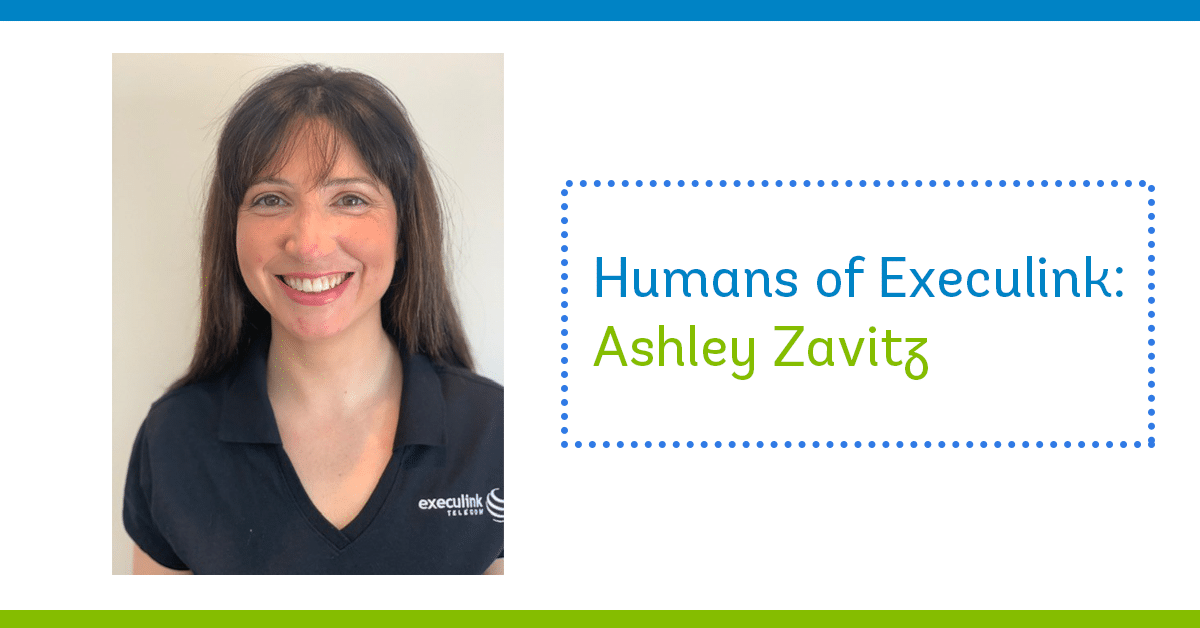
Humans of Execulink: Ashley Zavitz

As one of the winners of our 2020 Sales Excellence Awards, Ashley is a committed member of Execulink Telecom’s Sales team.  She is a Business Relationship Manager and works to build customized solutions for businesses across the province.  She has been with Execulink for over 7 years and finds a new challenge each day.  We were excited to learn more about Ashley’s role and life in this blog!


Register for Execulink’s Virtual Career Fair happening May 12th!

1. Do you remember your first day at Execulink Telecom?

My first day was Oct 7th 2013. I was welcomed with open arms by the Sales team and had a lot of learning to do. My background was doing sales training and supervising in industries totally different from telecommunications.  The learning curve was big at the beginning but it was a fun challenge.

2. How would you describe your role and what do you like about it?

I work with small, medium, and enterprise businesses to find solutions that work with their needs. This can be anything from an Internet connection and a Phone line, to a Fibre, Hosted Phone, and custom Wi-Fi setup. The sky’s the limit. The thing I like most about my job is the variety of tasks. Each task I take on is different so it keeps things interesting.  Also…the customers!  I absolutely love learning about my customers, their businesses, and families.

3. How would you define success?

Waking up and feeling happy knowing I have helped Execulink’s customers and my colleagues. I do the best I can each day to accomplish this.

4. People would be surprised if they knew:

I have my 1st degree black belt in Karate and Kung Fu.


Source: https://intothegloss.com/2016/11/jordana-brewster/

5. If Hollywood made a movie about your life, who would you like to see cast as you? Why that person?

Jordana Brewster because she is a strong and smart woman. She’s best known as Mia in the Fast and the Furious movies!

6. What three words would you use to describe Execulink?

Dynamic, trailblazing, connections

Rapid Fire – THIS or THAT Questions

  • Video games OR Board games? Board games
  • Having Wi-Fi wherever you go OR Having free computers for the rest of your life? Wi-Fi
  • Online shopping OR In-store shopping? I like both but currently online
  • VHS OR CD? CD
  • TV OR Movies? Movies
  • Phone OR Hosted Phone? Hosted Phone
  • Call OR Text? Call
  • Email OR Text? Text
  • Bluetooth speakers OR Bluetooth headphones? Bluetooth speaker
  • Working from home OR Working in the office? Working from home

Ashley works hard to build relationships with our customers to ensure they are satisfied with Execulink’s services.  She is an extremely valuable part of our team!  Check out our careers page to see if there are any opportunities open on the Sales team where you could have a chance to work with Ashley too!

Check out Execulink’s Career Page

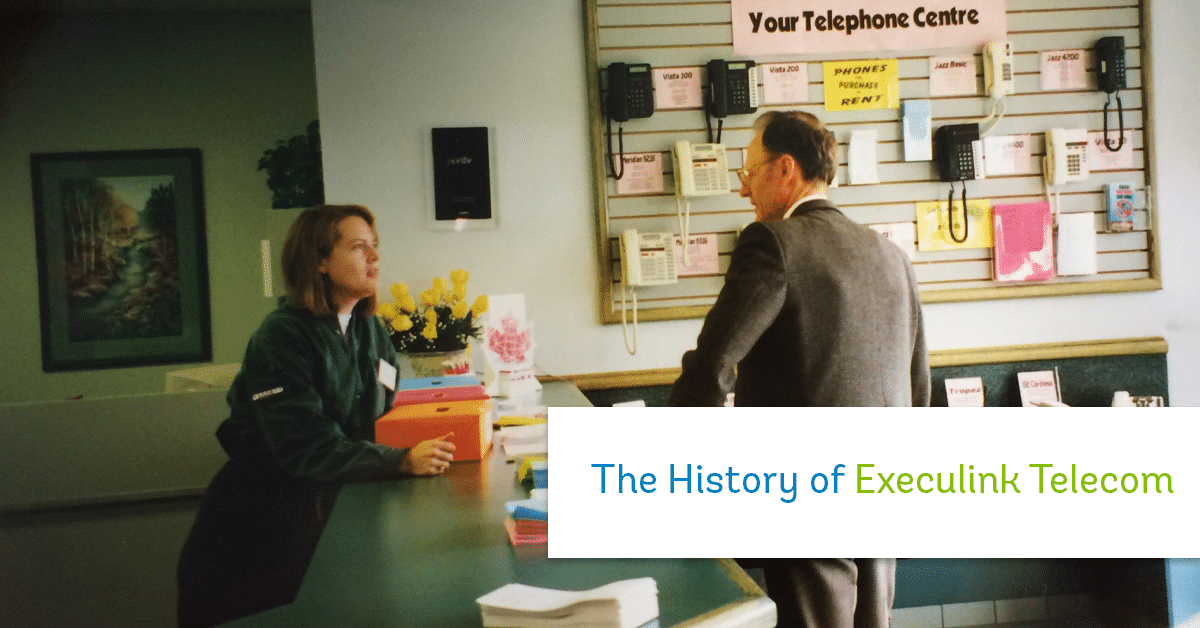
The History of Execulink Telecom

Execulink Telecom has a long history of servicing southwestern Ontario with telephony services which began in 1904. From then until now, the organization’s commitment to staying innovative and providing awesome experiences for its customers has remained the same.  The initial telephone services provided by the founding companies have grown to include Data, Internet, TV, Mobility, and Advanced Voice Features. This blog explores the history of Execulink and the decisions, leaders, and technological advances that brought the company to where it is today.

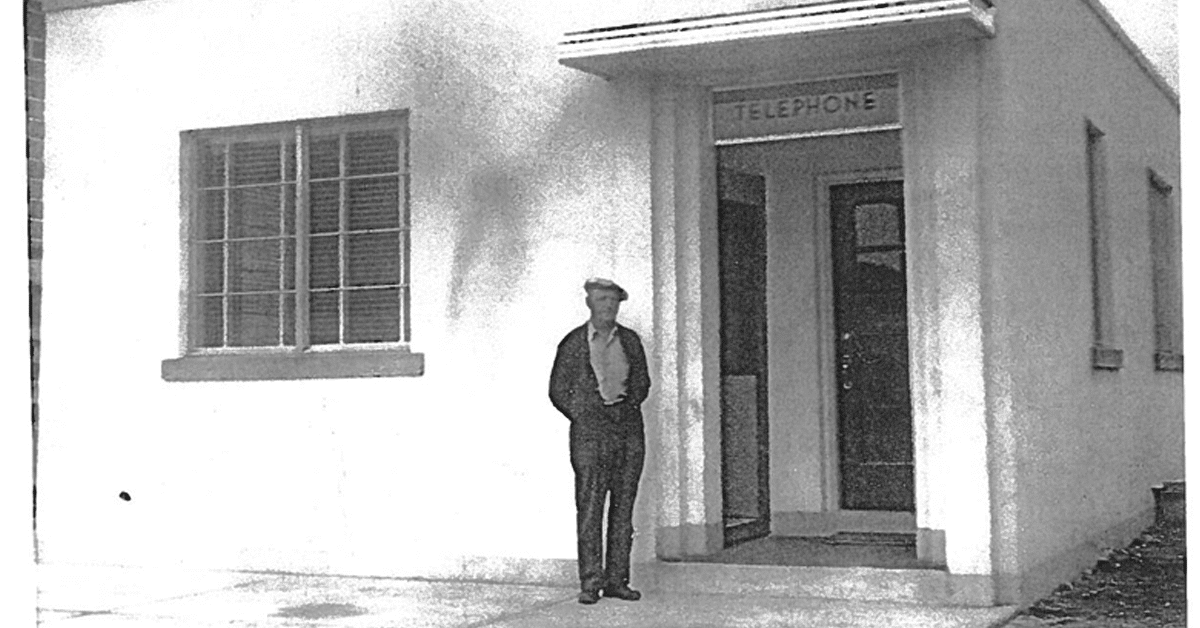
Anne Stephen and Keith Stevens in Burgessville at an open house when a new office opened in 1995.

The Burgessville Telephone Company

The Burgessville Telephone company was founded in 1904 by Dr. Service, a local medical practitioner. The first line connected his office to the general store in Holbrook, two miles down the road.  He believed that a local system would be of great benefit to the community, so he began circulating the idea among his neighbours.  A small group of enthusiasts offered to help him get started and donated their time and resources by digging post holes, stringing wire, and providing wood poles.

The first central switchboard was installed in 1905 in Burgessville and in a short time 200 phones were in operation.  The decision was made to incorporate a limited company.  In 1923, residents of the area signed a petition requesting the Township Council establish a municipal telephone system as a public utility. This signaled the transformation of the Burgessville Telephone Company into the North Norwich Municipal Telephone System.

North Norwich Municipal Telephone System

The 1923 petition heralded a new era in communications for this area. Municipal systems like this were formed to finance sophisticated equipment.  But the 1930s were a difficult time for the North Norwich Telephone Company and the rest of Canada as The Great Depression took its toll.  Unpaid accounts and the constant need to repair wires and poles led to financial worries.  However eventually the company’s commissioners and secretary-treasurer started seeing the light at the end of the tunnel during this tumultuous decade. The company would survive the financial hardship.

North Norwich Municipal Telephone System – Modernization

Throughout the 1950s North Norwich continued to grow and change. By 1951 the Burgessville exchange had outgrown the old building so a new brick structure was built to house a new office, storage space, and workshop.  A new switchboard was also installed when the building was complete. Throughout the 1960s, 1970s, and 1980s several upgrades were completed to the North Norwich Municipal Telephone System’s infrastructure as well. For example, on August 7th, 1979 a tornado cut a path of destruction through the area served by the telephone system.  More than 80 homes were destroyed and outside equipment including lines were completely demolished. To help combat this, in late 1979, Oxford MPP Harry Parrott, then Environment Minister, announced that an emergency grant of $100,000 would be awarded to the North Norwich Telephone System “to get back into business.”

The History of Hurontario Telephones Limited

A local telephone company was founded in 1908 serving Thedford, Arkona, Bosanquet, Warwick, McGillivary, West Williams and Adelaide Townships. Founders included Thomas Moloy, Dr. Alfred James Grant, and a number of other businessmen.  The group formed the Thedford, Arkona, and East Lambton Telephone Company. It quickly grew over the next few years.

Eventually, in 1948, it was sold to Dr. James A Vance of Woodstock and Mr. E.T. Downs of Toronto.  Dr. James A Vance was an administrator of the Oxford Telephone Company Limited, which serviced Princeton, Drumbo, and the township of East Oxford.  During this time, there were about 400 subscribers in the Thedford, Arkona, and East Lambton Telephone Company.

When Vance and Downs purchased the controlling shares of this company, they knew that the system needed updating, including a new switchboard and replacement of all 400 telephones. This upgrade program started in 1948 and finished in 1951. A new office was built in Thedford as well. In 1950 the company applied to change its name to Hurontario Telephones Limited.

The Hurontario Telephones Limited office located in Thedford in 1950.

Merger – North Norwich Municipal Telephone System and Hurontario Telephones Limited

At the end of 1983 discussions began about a potential sale of the North Norwich Municipal Telephone System.  Hurontario Telephones Limited sent an offer to the North Norwich board.  The two companies could better face the challenges of new technology by joining.  In a letter to North Norwich dated March 2, 1984, Hurontario Telephones’ Secretary-Treasurer Keith Stevens provided subscribers with a comparison of the two bids. In this comparison two specific pieces of information stood out. Hurontario’s existing telephone service rate was significantly lower than that of the other bidder and, perhaps most important, Hurontario’s offer would maintain local jobs and presence.

Keith Stevens on a phone call in the Thedford office taken when the company first converted to digital in 1987.

In March 1984 after a vote by the shareholders of the North Norwich Telephone Company the decision was made to sell to North Norwich Telephones Limited, and make it a subsidiary of Hurontario Telephones Limited of Thedford.  The new directors included Jim Stevens, John Downs, Paul Downs, Philip Walden and Keith Stevens. Don Stevens joined the board two years later.  After the purchase, improvements were made to increase the reliability of the telephone service.  A Nortel DMS 100 computerized central office was installed in Burgessville in 1985 and in Port Franks in 1987.

The two companies were kept separate for sometime and shares were offered to the previous owners.  Eventually by 1993 the operating names of North Norwich Telephones and Hurontario Telephones were kept and the parent company Hurontario Telecommunications Inc was formed.  Shortly after, the cable TV systems operated by Regional Cable Systems in Ilderton, Ailsa Craig, Thedford, Port Franks, Parkhill, Arkona, Forest, and Watford were for sale. An agreement was reached and this company was bought and its name was changed to Ausable Cablecom Inc.

In 1997 the Thedford office was renovated and enlarged.

The Internet and Execulink Telecom

In 1995, the company began offering Internet access in the Burgessville area and then shortly after, to Thedford. The Burgessville office added a new building in 1995 and the Thedford office was renovated in 1997.  Popularity of the Internet quickly grew and by 1998 there were over 3000 customers.

Company officials were pondering how to expand further.  At the time, Execulink Internet Services was operating out of Woodstock and London. It was discovered that Execulink was looking to sell their operations.  Negotiations began and the purchase of Execulink by Hurontario Telecommunications Inc. was completed.

Execulink Telecom

In 1999 there were 4 different divisions – Hurontario Telephones Limited, North Norwich Telephones, Ausable Cable Com., and Execulink Internet Services Corporation – under the parent company – Hurontario Telecommunications Inc. This was confusing for customers and made marketing very difficult. So in 2000, it was decided the name Execulink should be adopted as the name for all the companies.

From 2000 – 2002 the company bought another series of Internet Service Providers including MGL in Guelph/Kitchener and Odyssey in London.  One of the larger acquisitions was Golden.net in 2004 which was based out of Kitchener. As these were integrated into the Execulink network, the geographic boundaries expanded. In 2000 the company also began reselling DSL services to customers across Ontario.  As the years progressed, Execulink remained committed to providing innovative experiences for their customers by getting into long distance calling services and building its own Fibre Internet infrastructure. Execulink’s Fibre Internet, TV, and Phone services began to expand across many areas in rural Ontario where previously only dial-up connection was available.

In 2006, Keith Stevens retired from his post as CEO and assumed the role as chairman of the Board of Directors. His son, Ian Stevens was promoted to become the CEO.

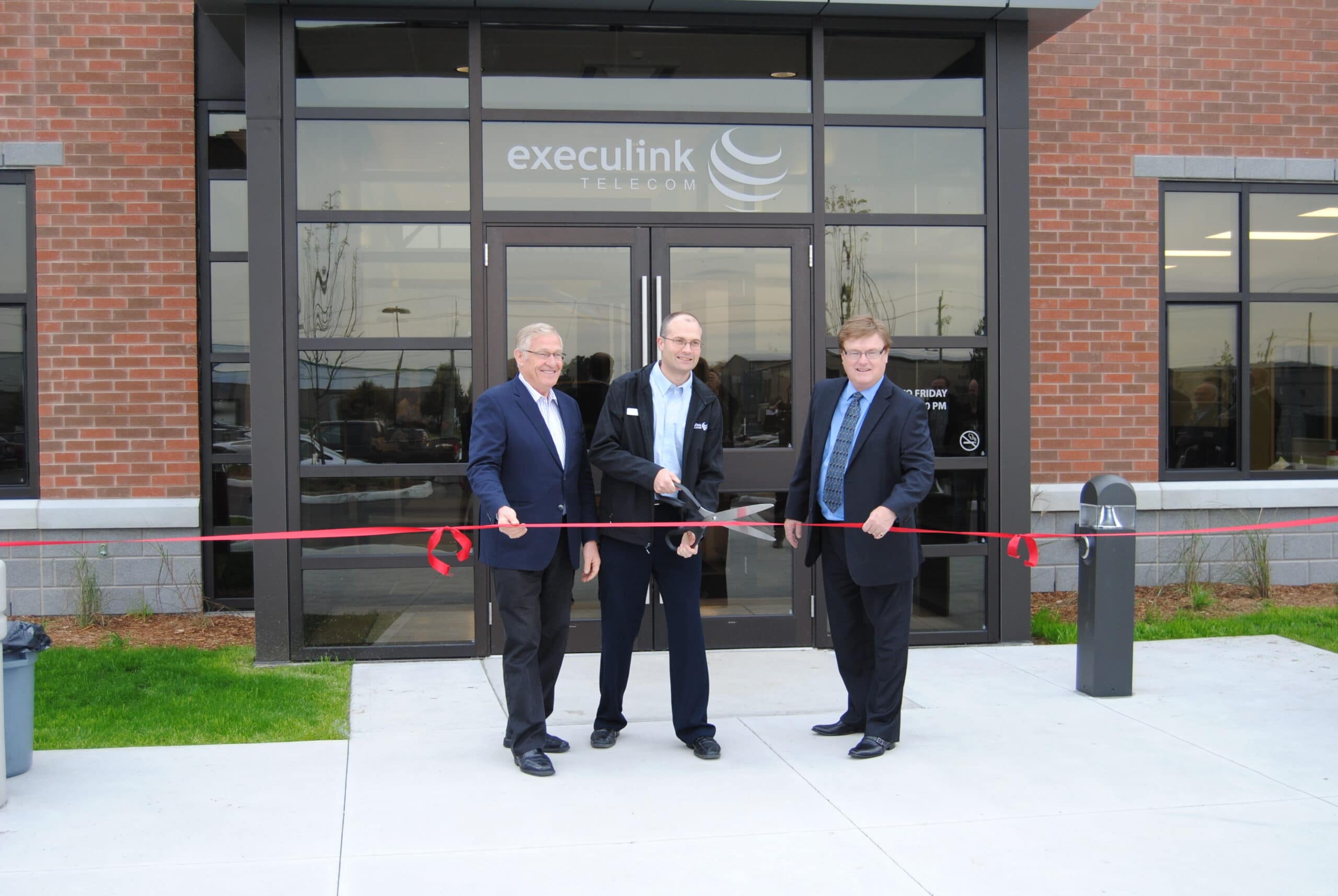
Execulink CEO Ian Stevens (middle) cuts the ribbon at the Woodstock office grand opening in 2013 alongside MPP Earnie Hardeman (left), and Paul Plant of the City of Woodstock. Staff amalgamated at this location from London, Kitchener, and Burgessville. This is the current head office.

Expansion and Stores

Execulink has continued to focus on expanding and improving its Fibre and Hybrid Fibre infrastructure across Oxford, Norfolk, Lambton, and Middlesex Counties. In January 2013 the company launched a new mobility service.  In 2014, Execulink expanded by selling third party Cable Internet services across Ontario. In addition to the offices in Thedford and Woodstock, Execulink opened store locations in Port Dover and Tillsonburg to support its customers in those towns.  A store in Delhi was also open from 2014 – 2020.

Get Started Today with Execulink Telecom

Throughout its history Execulink has remained committed to enhancing customer lifestyles’ at work, home, and play.  Staying innovative and embracing the newest technologies helped to cultivate local telephony offerings into a full-scale suite of telecommunications services including Data, Internet, Mobility, TV, and Advanced Voice Features for residential and business customers. At the heart of the organization is a commitment connecting and supporting local communities in southwestern Ontario.

With 24/7 support and a wide range of options to suit every lifestyle, Execulink has the awesome services your home or business needs to stay connected to what matters the most! Call 1-866-706-1942 today, and visit the Internet, TV, Phone, Bundles or Business services page to find the package you’ve been looking for!
Contact us today!

What is Hosted PBX?

As businesses continue to adjust to the new normal, they are increasingly seeing the value in reliable communications systems that can adapt to their changing business needs. Now more than ever, it’s important to have the right business phone systems in place. As a primary source of communication between your employees, co-workers, and customers, if the phone system goes down or cannot adapt, it will have a massive impact on your productivity, customer satisfaction, and brand reputation.

As more businesses search for better communication services and sift through the various options available, there are unsurprisingly many questions that arise. What is the best phone system for my business needs? What phone features do I need? And perhaps one of the most common questions we hear – What exactly is a Hosted PBX?

To make things easier for you, we’re breaking it down so you can decide if Hosted PBX is the right choice for your business. Read on to find out what a hosted phone system is, how it works and what the benefits are to your business.

What is a Hosted PBX System?

A Hosted PBX (Private Branch Exchange) is an Internet-based or cloud-based phone system that is hosted off-site. It allows you to make calls using the Internet rather than relying on copper wires or fibre optics to make a connection as many traditional analog phones do. Your phones are physically on-site, but they connect to secure cloud servers through a new or existing Internet connection.

Routing calls through the Internet allows for multiple/concurrent calls without worrying about individual lines. Just how many concurrent calls is based on your Internet bandwidth. The better your bandwidth, the more calls you can have simultaneously. To give you an example, a typical voice DSL connection allows for 7-8 concurrent calls, whereas a Fibre voice connection can provide 100+.

A hosted phone service provider like Execulink can review your call capacity expectations with you and provide a dedicated voice connection so you never have to worry about how many “lines” you have!

How does it work?

When a phone system is hosted off-site, it means the responsibility of hardware, software, training, operations, maintenance, and more is handled by a service provider. The service provider manages the regular updates and upkeep, freeing organizations from endless hardware upgrades, repairs, and the overall complexity of managing a cloud-based phone system on site.

In short, a hosted phone streamlines your company’s business communications, making it more flexible, scalable, easy to use, and easy to manage, resulting in much lower administration and set up costs that you would see with a traditional phone system.

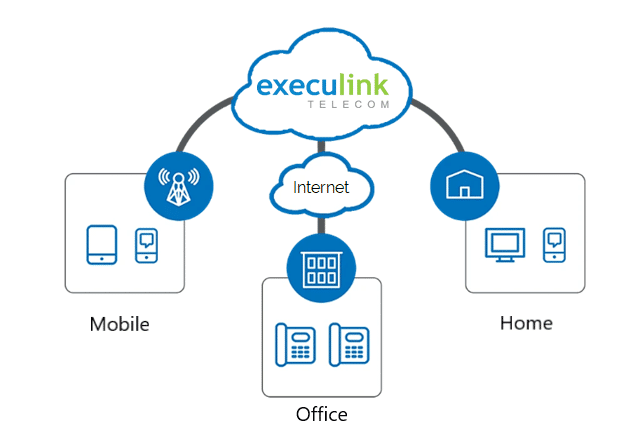
Below is visual example of how Execulink hosts a phone system on its private network.

Execulink’s Hosted Phone Service is a full-featured IP-based phone system, centrally hosted by Execulink Telecom in our own redundant and secure Data Centre. Your business phone service is delivered through a broadband connection providing the features and voice quality typically associated with a traditional phone system.

How does it benefit your business?

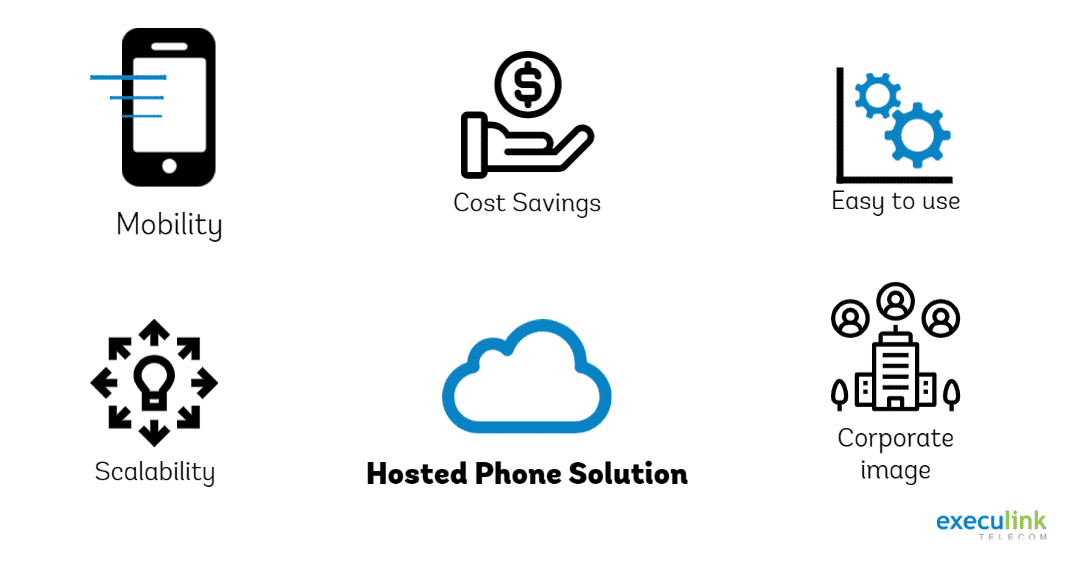
Implementing a hosted phone system has many benefits including cost efficiencies, scalability and, employee flexibility. Below are some of the main benefits to your business:

Cost Efficiency

Compared to traditional phone services, hosted phone systems offer large cost savings. The large upfront costs associated with owning and installing an on-site telephone system, which can cost up to $60/line, are eliminated. On top of these immediate savings, you save significantly over time by removing the need to have staff in-house to operate and maintain the system.

Flexibility

A hosted phone solution allows you to take your business with you, anywhere and anytime. You can customize your call flow based on your business’ specific needs, replicate a dynamic office environment from your mobile device, and take calls if you’re out of office. Essentially, employees can work from anywhere! This is ideal for remote working as well as for any outbound staff who may be required to travel.

If your business has multiple locations, the hosted phone system enables all of your sites to function as a single organization, even when each site is separated geographically. A hosted phone provides a unified management platform and the extension of shared feature sets at each site. With direct extension dialing between offices and remote presence for home office users, phone calls are managed as if all of your employees are in the same physical location even when they’re not.

Scalability

A hosted phone system can scale based on your business needs. You have the ability to add new features as they become available, add additional lines, phones, and even new departments or site locations!

Regardless of if you’re a startup or small business that is quickly growing or a medium-to-large enterprise with multiple departments and site locations, hosted phone systems are a great fit for any organization. Whether you require a system to aid in business function and boost corporate image or to assist with streamlined call flows and advanced communication features, a hosted phone system provides you with customizable solutions to meet all your organization’s needs.

Features

Hosted phone systems come with all the standard features of a traditional on-site phone system you know and love while offering additional advanced features. The best part is that you can choose the exact features, integrations, and applications that your business requires and only pay for what you need.

For example, Execulink offers customers access to a comprehensive list of included phone features. These include basic business phone service requirements such as call forwarding, conferencing, and auto-attendants as well as numerous advanced options, such as call queuing, music on hold, call park, and hunt groups.

Easy to Use/Easy to Manage

Because the regular maintenance and upkeep of a hosted phone system is managed by a service provider, it inherently makes it easier to use than a traditional phone system. Service providers like Execulink also offer an easy-to-use and intuitive web interface for managing the phone system, allowing for simplified on-site or remote management.

Your business communication systems play a vital role in your day-to-day operations and customer experiences. A hosted phone solution not only provides a secure and reliable source of communication with your customers and employees and saves you money on upfront and long term expenses, but also frees you of IT-related duties and ongoing maintenance.  Overall, it enables you to adapt to the ever evolving business communication landscape and allows you and your team to focus on what matters: the growth of your business.

To learn more about Execulink Hosted Phone solutions, speak to an Execulink Business Representative today.

Learn more about Hosted Phone Solutions!

Satellite Internet vs. Fibre Internet

The Internet is part of our everyday lives, which is why choosing the right Internet technology is so important. With all of the options on the market, shopping for Internet services can feel overwhelming. Depending on where you’re located, you may be considering a range of options including Satellite Internet or Fibre Internet. Understanding the advantages and disadvantages of each type can ultimately help you find the right solution for you.

In this blog, we’re breaking down how speed, availability, reliability, and service cost compare across Satellite and Fibre Internet.

At Execulink, we provide high-speed Internet service across southern Ontario. We understand how important it is to our customers to receive reliable service without interruption. We offer 24/7 customer support to help keep your Internet running as fast as possible. When you’re shopping for Internet service, explore our Internet packages to find the one best suited for you.


Learn about Fibre Internet here!

How Do Fibre Internet and Satellite Internet Work?

Fibre Internet uses Fibre optic cables (flexible, transparent Fibre made of glass or plastic) to deliver information to your home as a coded beam of light. Fibre replaces traditional, out-of-date copper wiring previously installed in homes and buildings with a more modern connection capable of delivering the next generation of Phone, Internet, and TV services.  For those interested in this type of Internet, you’ll be happy to learn that the government of Canada is working towards bringing Fibre Internet to rural regions across the country!

Meanwhile, Satellite Internet works by orbiting in outer space, sending signals down to your Satellite dish receiver on your home, and finally to your modem where it is translated into an Internet connection. You’ll be required to keep a Satellite on your property in order to enjoy this type of Internet.

Internet Speed

The distance of the Satellite can sometimes cause more latency compared to Fibre Internet, which is considered a low latency option. This means that there’s a slight delay between performing an action and seeing the result. The fact is data travelling from distances that great simply cannot compete with other Internet options.

Satellite Internet has sufficient speed for activities like email and surfing the web, but isn’t ideal for activities that require a lot of bandwidth, like video streaming or online gaming. Both the upload and download speeds are slow which may cause you to miss a beat when you need real-time feedback. Depending on the service provider, there may be data caps with Satellite Internet as well, which can be quite limiting if you’re a heavy Internet user.

In comparison, Fibre Internet has super-fast speeds ideal for high bandwidth activities. This means you won’t be slowed down during your Netflix or Crave binge-sessions or adrenaline-fueled gaming marathons. It can support multiple devices under one roof, using just one connection.

However, it’s important to keep in mind that the actual speeds you’ll experience depend on a range of factors including your Internet service provider (ISP) and package. Choosing the right package for your needs can help amplify your online experience and give you the best value for your money.

Reliability

Since Satellite Internet relies on a wireless connection, it can experience more interference than Cable or Fibre Internet, which are hardwired and therefore can perform more reliably. Harsh weather conditions like thunderstorms, lightning, sunspots etc. can all affect the reliability of Satellite Internet. Another common concern can be obstructions like trees or buildings, which can also compromise the strength and reliability of your Satellite Internet connection.

The advantage of Fibre Internet is that extreme weather conditions do not affect its performance since the wiring is buried deep in the earth. It will continue to perform effectively despite rainstorms or wildlife disturbances, so you won’t need to worry about your Internet going out when you need it the most.

Availability

Satellite Internet is widely available since it doesn’t require cables or wiring. Since the signal comes from outer space, it can be picked up almost anywhere in the country as long as there is clear sky. In fact, in some remote areas, Satellite is one of the main options for Internet service.

Fibre Internet may not be available in all areas since it requires underground wiring. However, service providers like Execulink are bringing Fibre Internet to an increasing number of remote/rural areas. We’re not only delivering it to your neighbourhood, but also directly to individual homes and businesses.

Service Cost

Satellite Internet can be expensive, especially if you live in a remote location. If you compare Satellite Internet costs to other types of Internet offering comparable speeds, the cost of Satellite tends to be higher in most locations. So, if your deal breaker is affordability, this may not be the right type of Internet for you.

On the other hand, Fibre Internet can be an affordable option depending on the ISP. Some Fibre Internet providers will offer a variety of package options, allowing you to tailor your Fibre Internet plan to your usage needs and price point. This can be a welcome relief if you’re not a frequent Internet user, since you’ll only pay for the amount of Internet you use.

Is Satellite or Fibre Internet Right for You?

 There are many factors to consider when choosing between Satellite and Fibre Internet. If you need a fast and reliable connection that is affordable, Fibre Internet may fit the bill. However, depending on where you’re located or if you’re consistently on the move (living in an RV for instance), Satellite may be the best option. This being said, as providers like Execulink continue to expand Fibre Internet coverage to more rural and remote communities, everyone can benefit from these reliable, lightning-fast connections – wherever you are!

With 24/7 support and a wide range of Internet options to suit every lifestyle and budget, at Execulink we are proud to provide the awesome services your home or business needs to stay connected to what matters the most! Call us at 1-866-706-1942 today or visit our Internet page to find the Internet package you’ve been looking for!

Qualify your address for Internet today!

Case Study – Lighthouse Festival Theatre


Introductions: Who is the Lighthouse Festival Theatre?

The Lighthouse Festival Theatre is located in beautiful downtown Port Dover, Ontario. It is dedicated to fostering and promoting live professional theatre in southern Ontario; for Canadians by Canadians. The theatre has put on 170 productions since its inception in 1980. It uses Internet in a variety of ways to keep staff and patrons connected in the box office, during private events, live shows, and presentations.

THE CHALLENGE

The Lighthouse Festival Theatre struggled with Internet service reliability for several years, ultimately leading up to its decision to switch its services to Execulink. Prior to switching, unreliable Wi-Fi prevented the theatre from modernizing patron experiences. At times, staff would be disconnected for hours. With those struggles top of mind, there were several key requirements that needed to be addressed when switching to Execulink’s Fibre Internet.

The theatre needed better Wi-Fi coverage to scan tickets faster and improved connectivity for presentations to enhance special events. When the theatre made the decision to upgrade its ticketing software, it knew the Internet connection issues also needed to be solved. Execulink resolved these issues and the Fibre Internet connection continues to exceed expectations.

THE SOLUTION

The expected outcomes were:

  • Better Wi-Fi coverage in the box office, lounge, and theatre
  • Improved connectivity for presentations at special events
  • Speeds to support a cloud-based ticketing software

The Execulink Sales team and Technicians understood the challenges the Lighthouse Festival Theatre faced with its previous provider. They also considered the requirements for the new cloud-based ticketing software the theatre would be on-boarding later that year. When developing the Fibre Internet solution, Execulink worked closely with theatre staff to identify the right service for everyone’s needs. The theatre building is old and large which can hinder connectivity. The required Internet speed was 90 Mbps download and 10 Mbps upload. The introduction of a fully managed Wi-Fi network with several access points set up throughout the building allowed for enhanced Wi-Fi coverage. Previously, there was only one router installed in the auditorium booth. The Lighthouse Festival Theatre also required internal and external (patron/client) services. Execulink was flexible in the installation process and was able to have the theatre connected before the start of its 2019 season. The transition was smooth and the theatre felt confident during the entire process.

“Working with Execulink to set up Fibre Internet was very smooth!”

Nicole Campbell
Executive Director, Lighthouse Festival Theatre

THE RESULTS

Having Execulink Fibre Internet made moving to the new ticketing software easy. This software was key to growing the theatre’s business opportunities. Fibre allowed private and third party entertainment groups access to reliable Internet when renting the theatre and lounge spaces in the off-season. Their presentations and performances would not be hampered by connectivity issues. Making the switch to Fibre had set the theatre up for success.

When the global pandemic hit, the theatre had to cancel its season and move its staff to working from home. Staff needed to be able to remotely connect to the theatre’s secure network. Knowing that the Internet in the theatre building was reliable was incredibly valuable and relieved some stress in a tumultuous time. In the year that the Lighthouse Festival Theatre team has been working from home, connecting to the files and systems in the theatre has never been a concern.

Whenever the theatre requires customer support from Execulink, “it’s wonderful,” says Nicole Campbell, Executive Director at the Lighthouse Festival Theatre. “The Customer Care team is easy to get a hold of, quick to help identify issues and provide the necessary solutions. This is unlike any other provider the theatre has ever used. Execulink treats the theatre and its staff with care.”

The Lighthouse Festival Theatre looks forward to continuing its partnership with Execulink Telecom and staying connected with lightning-fast Fibre Internet.


https://lighthousetheatre.com/

Related Links

Interested in learning more? Check out some of these handy links below.

Humans of Execulink: Jon Preston

Jon has worked at Execulink for just over 5 years and is passionate about providing an awesome experience for customers in his role as Sales Support Representative. His friendly personality and willingness to help makes collaborating with Jon a pleasure! He has a strong understanding of Execulink and telecommunications. It was fascinating to learn more about his role and ambitions!

Check out your Home Phone Options!

1. How would you describe your job to a child?

I would describe my job to a child as wearing many different hats throughout the day.

2. How would you describe your daily routine at work?

Throughout the day, I act as resource for the Sales and Customer Care departments at Execulink. In addition, I engage in communication with other telecommunication representatives.

During the morning hours, I submit the required paperwork to activate telephone numbers and cancel previous services on behalf of the customer.  When Execulink’s technicians begin their work day I provide them support during their installations and services calls. Throughout the afternoon, I assist with the provision of our wholesale orders.

3. What’s one essential task that you do everyday in your work?

One of the essential tasks I do everyday is the transferring of telephone numbers to Execulink and placing service cancellations with the customer’s previous provider. When new customers activate their telephone with Execulink, I submit the required paperwork to their current provider to have their telephone activated on the day of the install. Once the installation has been completed, I submit the required paperwork to have their services cancelled with their previous provider.

4. If you could choose anyone who would you pick as your mentor? (Could be someone inside or outside Execulink.)

I would choose the Canadian economist Mark Carney.  He oversaw two different financial uncertainties as the Governor of the Bank of Canada from 2008 to 2013 during the Great Recession and the Governor of the Bank of England from 2013 to 2020 during Brexit.

5. What’s a recent app that you’ve downloaded? Why did you download it?

A recent app that I downloaded was Yahoo Fantasy Sports. The app was downloaded to allow me to complete a fantasy baseball draft.  This is a fun way to follow sports and compete with my friends and family!

Rapid Fire THIS or THAT Questions

  • Apple or Android? Apple
  • Chrome or Firefox? Firefox
  • Internet or TV? Internet
  • Texting or Phone call? Phone call
  • Spring or Fall? Fall
  • Laptop or Desktop? Desktop
  • Fridays or Saturdays? Saturdays
  • Coffee or Tea? Tea
  • Homemade lunch or eating out? Homemade lunch
  • Smart TV or Smart Thermostat? Smart TV

As a key member to our Sales Support Team, Jon’s ability to liaise with various departments and keep organized makes him an extremely valuable employee!   It was fascinating to learn more about what his role entails. The help he provides on a daily basis is appreciated by everyone.  If you are interested in learning more about the open opportunities Execulink has, visit our careers page to check them out.

About Execulink

With over a century of experience in the telecommunications industry, Execulink has been serving Ontario proudly since 1904. Our team is extremely knowledgeable about our products and plans and we are happy to help in any way we can. We offer several unlimited Internet options that are straightforward and easy to understand.  Give us a call at 1-866-706-1942 to learn more.

7 Ways to Repurpose Old Electronics

Deciding what to do with old electronics is never an easy task. You can take them to an electronic recycling program or donate them. But have you ever considered using them for decorations or DIY projects around your home? That’s right, you can use your old electronics to make everyday household items, jewelry, or fun crafts. This past year has required a lot of creative thinking when it comes to finding projects to stay occupied at home.  Here are some craft ideas that maybe you haven’t thought of yet!

Check out Your Unlimited High Speed Internet Options!

1. CD Coasters

Take old CD’s that you don’t need or use, decorate them, and use them as coasters. This repurpose just needs some sand paper, fabric, old CD’s and glue.


(Source: Crafts by Amanda)

2. Fish Tank

Use a vintage TV or an old desktop computer screen to make a fish tank. Watch this video to see how this man turned an old iMac into a fish tank.

3. Greenhouse

With all of those CD’s being turned into coasters, what are you going to do with the cases? Why not turn them into a greenhouse? Follow the steps in this DIY website to learn how to do it!


(Source: megacrafty.com)

4. Pet Bed

Turn a vintage TV into a bed for your fluffy friends.

5. Storage Container or Piggy Bank

Use old floppy discs (yes, old floppy discs) to make a storage container or pot for your plants by gluing them together. If you put a floppy disk on top of the container can turn into a piggy bank for spare change!


(Source: Fractus Learning)


(Source: Orange County Register)


(Source: Redgage)

6. Earrings

Use old keyboard keys or remote control buttons to make your own earrings.


(Source: Craft Gawker)

7. Guitar Picks

Use old circuit boards to make a new guitar pick.


(Source: Spoonflower blog)

These are just a few of many different ways to repurpose your old electronic devices, and something to do other than just taking them to a recycling program. All of these options are environmentally friendly and your old technology will never go out of style!

Qualify your address for awesome Internet!

Stay Connected with Execulink Telecom

Keep your new and old technology connected with Execulink Internet, TV, and Phone services! Qualify your address today by visiting our residential Internet page or give us a call at 1-866-706-1942 to speak with our Sales team. Whether you’re looking for higher speed options or basic packages for surfing the web, you deserve to stay connected to everything that matters at work, home, and play!

The Internet Services You Deserve
Affordable. Reliable. Lightning fast.

We’re proud to provide the communities we know, love, and live in, with the reliable Internet, TV, Phone and Mobility services they deserve.

  • Your local choice for residential and business telecommunication services
  • Renowned 24/7 customer service you can depend on
  • Affordability, service, integrity and transparency are the pillars of our business

Here to help. 24/7.

Sales Inquiries

Sales: Mon-Fri 8AM-8PM, Sat 8AM-5PM

(866) 706-1991

Support Inquiries

Technical Support: 24/7, Customer Care: Mon-Sun 7AM-11PM

(866) 706-1994

Online Help

Chat With Us

We'll respond as soon as we can!

Email Us

We'll get back to you as soon as possible.

Support Centre

Find the answer to your question.

Check availability

Enter your address to find services and offers available to you!